Amniocentesis Test in Chennai – Diagnostic Prenatal Testing
Jammi Scans provides amniocentesis as part of its prenatal diagnostic and fetal medicine services in T. Nagar, Chennai.
The procedure is performed by Dr. Deepthi Jammi and the fetal medicine team under continuous ultrasound guidance when diagnostic testing is recommended after appropriate counselling.





What is Amniocentesis?
Amniocentesis is a diagnostic prenatal test used to confirm whether a baby has certain chromosomal or genetic conditions.
The baby is surrounded by amniotic fluid inside the uterus. This fluid contains fetal cells. During amniocentesis, a small amount of this fluid is carefully withdrawn and sent to a laboratory for detailed analysis.
Unlike screening tests such as Double Marker Test, amniocentesis provides a definitive diagnosis, not just a risk estimate.
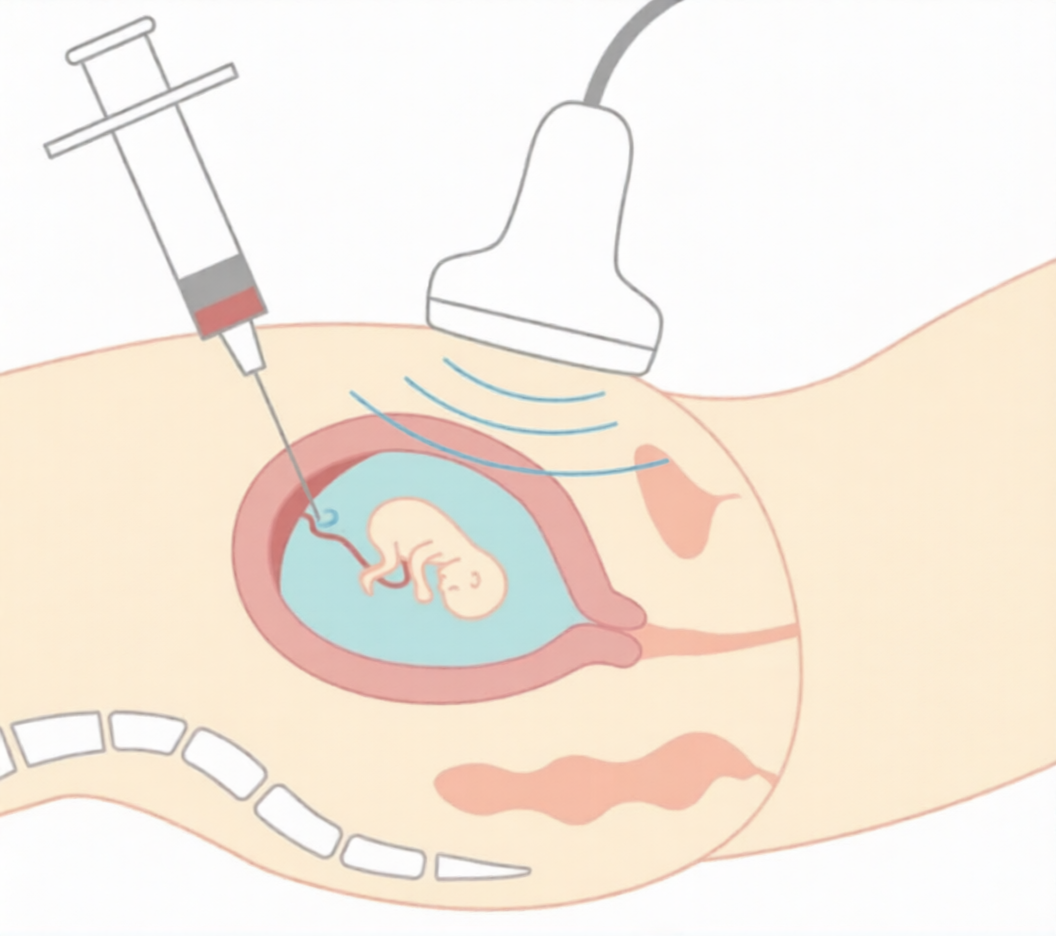 Amniotic fluid is drawn from amniotic sac.
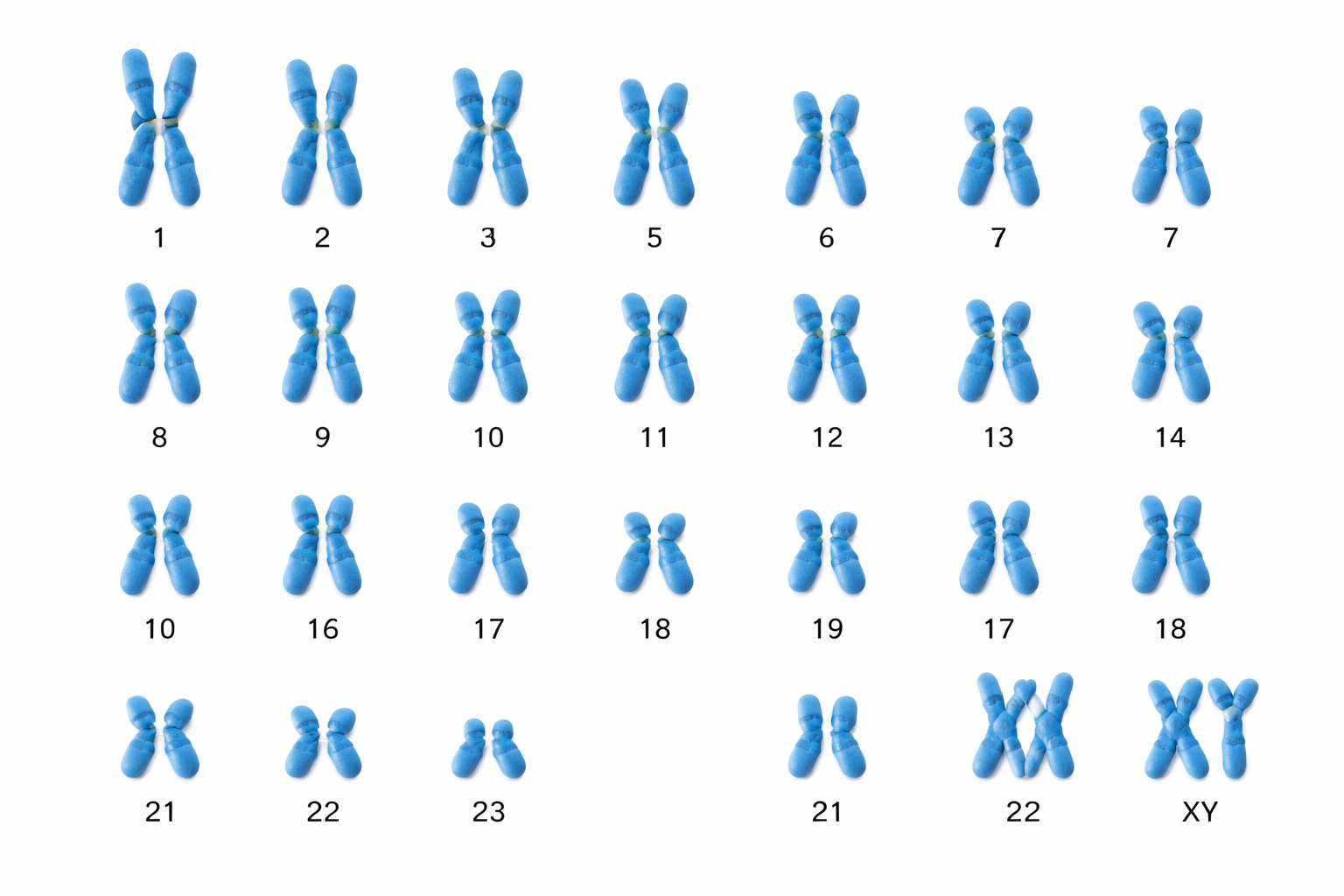 Chromosomes
Amniocentesis test week
Amniocentesis is an interventional procedure that is usually carried out between 15 and 20 weeks of pregnancy.
- Adequate amniotic fluid – By 15 weeks, there is enough amniotic fluid around the baby to safely carry out the test.
- Early diagnosis possible – Helps detect chromosomal or genetic conditions in the second trimester.
- Timely medical decisions – Allows parents and doctors to plan further care or intervention.
When is Amniocentesis Recommended?
Amniocentesis is not routinely recommended to all pregnant women. It is advised only when there is an increased risk of a chromosomal or genetic condition. Your doctor may recommend amniocentesis if:
NT scan results are abnormal
Suspected intrauterine infection
Structural abnormalities are detected on ultrasound
Previous child or pregnancy affected by Trisomy 21, 13, or 18
Screening tests show high risk
Maternal age is 35 years or above
Family history of genetic disorders
Parents are known carriers of genetic disease
What Conditions Can Amniocentesis Detect?
Amniocentesis is a highly accurate diagnostic test used to identify a wide range of chromosomal and genetic conditions early in pregnancy.
Chromosomal Abnormalities
- ✓Down syndrome (T21): Extra copy of chromosome 21
- ✓Edwards syndrome (T18): Extra copy of chromosome 18
- ✓Patau syndrome (T13): Extra copy of chromosome 13
- ✓Turner syndrome (Monosomy X)
- ✓Other sex chromosome abnormalities
- ✓Rare aneuploidies
Genetic Disorders
- ✓Thalassemia
- ✓Sickle cell disease
- ✓Cystic fibrosis
- ✓Muscular dystrophy
- ✓Tay-Sachs disease
Neural Tube Defects
- ✓Spina bifida
- ✓Anencephaly
Important Note: Amniocentesis cannot detect every birth defect and may not determine how severe a condition is.
How is Amniocentesis performed?
Amniocentesis is a safe, outpatient procedure performed by our fetal medicine experts under continuous ultrasound guidance.
Before the Procedure
- A detailed ultrasound scan is performed to determine the baby’s position and placental location.
- A safe pocket of amniotic fluid is located far away from the fetus to carry out the procedure.
- The healthcare provider explains how the procedure is done, along with the risks, and obtains consent.
During the Procedure
- The abdomen or cervix area is cleaned with an antiseptic solution.
- A thin needle is inserted on the abdomen and is inserted into the amniotic sac carefully under continuous ultrasound guidance.
- A small amount of amniotic fluid is withdrawn from the sac
- The sample is then sent for a test.
After the Procedure
- The baby's heartbeat is checked using ultrasound.
- The mother is admitted in the hospital or clinic for a short period of time usually up to an hour for observation.
- The mother is advised to take rest and refrain from doing intense physical activity for the rest of the day.
- The removed amniotic fluid automatically gets replaced.
Amniocentesis Test Price in Chennai
The average price of an Amniocentesis test starts from ₹19,500 depending on various factors.
Chennai
Amniocentesis Test Price
Starts from ₹19,500
⚡ Receive Report in 1 - 4 weeksAppointments : Monday - Saturday
Choose your convenient time slot between: 8.30 AM - 6 PM
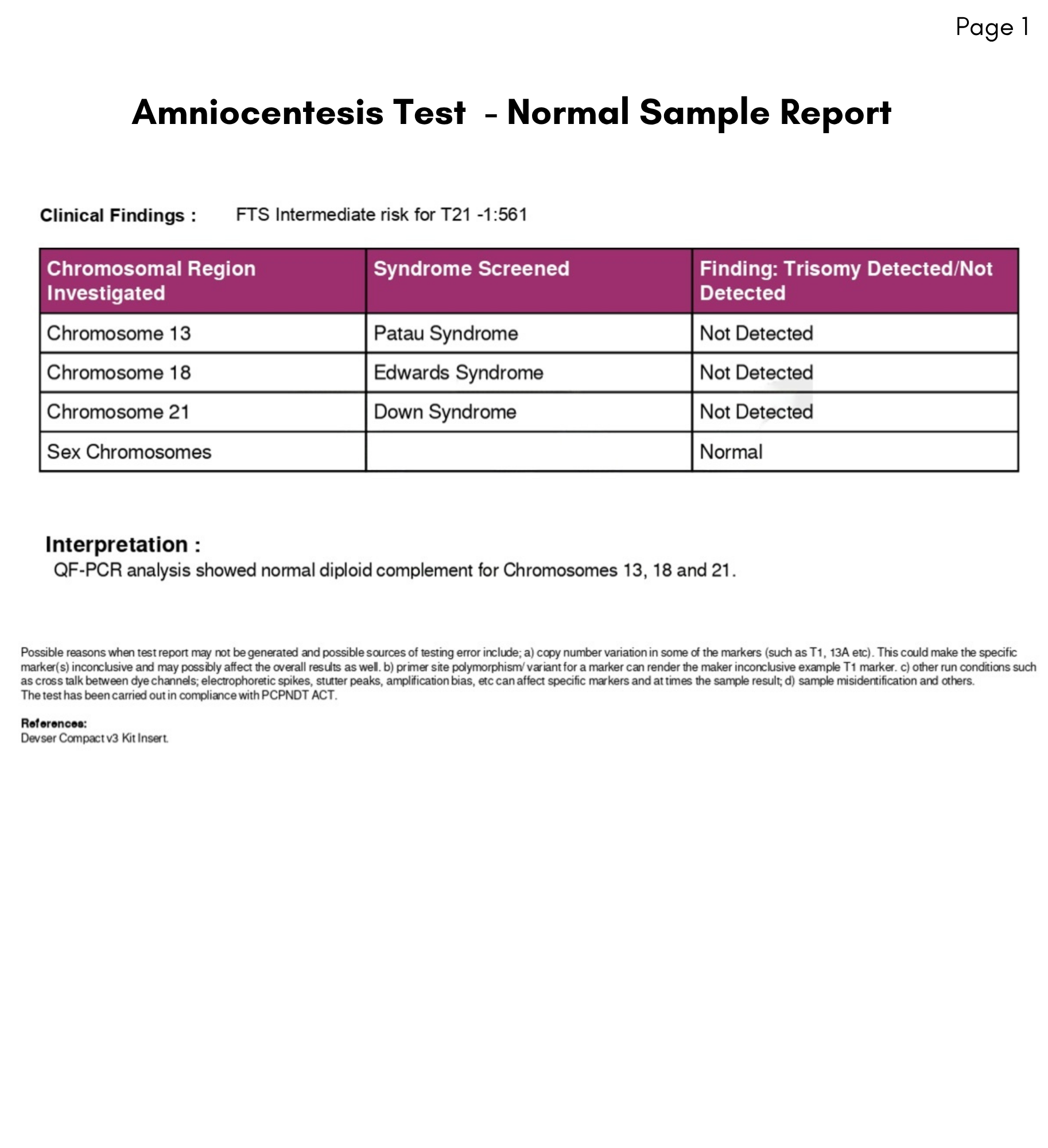
Amniocentesis Report
See what a comprehensive amniocentesis reports look like.
Is Amniocentesis Painful?
Amniocentesis is often described as mildly painful. Most women describe it as uncomfortable rather than painful.
What is the Risk of Miscarriage?
Understanding the safety profile of the Amniocentesis procedure.
It is said that the miscarriage rate of amniocentesis is 1 in 200 (0.5%) while the risk may be slightly higher in twin pregnancies.
Most procedure-related losses, if they occur, happen within the first 72 hours after the procedure, although they may occur later in rare cases.
It is important to seek immediate medical attention if you experience:
- Heavy bleeding
- Severe abdominal cramps
- Leakage of fluid
When Will I Get the Results?
Amniocentesis test results usually take about 1 - 4 weeks, although this may vary depending on the specific type of genetic testing performed and the laboratory processing your sample.
FAQs
Quick answers to your most common questions.
A positive result suggests that the fetus has the genetic problem tested for. In this case, your doctor will discuss the results with a genetic counsellor. They can help you understand the problem, talk to you about your options, and help you decide what to do next.
- Genetic amniocentesis is usually performed between weeks 15 and 20 of pregnancy.
- It is known that amniocentesis done before week 15 of pregnancy is associated with higher rates of complications. d.
There is a small risk associated with your baby during amniocentesis. This is approximately less than 1%. Other very rare complications can be injury to the baby or mother, infection, and preterm labor.
Amniocentesis gives a definitive result. It has a reliable rate of 98%. However, it can’t detect all genetic problems or other abnormalities.
The test checks for fetal abnormalities (birth defects) such as Down syndrome, cystic fibrosis or spina bifida. Other genetic problems, or neural problems, and Rh incompatibility cannot be detected by amniocentesis. Talk to your doctor to be well informed before the procedure.
Limitations of Amniocentesis
While amniocentesis is a highly accurate diagnostic test, it is important to understand that it has certain limitations.
Cannot detect all birth defects
Amniocentesis mainly identifies chromosomal abnormalities and specific genetic disorders. It cannot detect every structural or developmental problem in the baby such as clubfoot, and heart.
May not predict severity
Even if a condition is detected, this test usually cannot determine how mild or severe the condition will be after birth.
Small risk of procedure-related complications
There is a small risk of miscarriage, infection, fluid leakage, or cramping after the procedure.
Important: Despite these limitations, the Anomaly scan remains one of the most valuable tools in prenatal assessment. At Jammi Scans, Dr. Deepthi Jammi uses advanced ultrasound technology and specialised expertise to provide the most accurate evaluation possible.
Amniocentesis Vs CVS
A detailed comparison to help you understand the key differences between Chorionic Villus Sampling and Amniocentesis.
| Factor | CVS (Chorionic Villus Sampling) | Amniocentesis |
|---|---|---|
| When it is done | 11–13 weeks + 6 days | 15–20 weeks |
| Trimester | 1st trimester | 2nd trimester |
| Sample collected | Placental tissue (chorionic villi) | Amniotic fluid |
| What it detects | Chromosomal and certain genetic conditions | Chromosomal, genetic conditions and neural tube defects |
| Neural tube defects | Cannot detect | Can detect (via AFP levels) |
| Result timing | 2–3 weeks | 2–3 weeks |
| Risk of miscarriage | Small risk (about 0.5–1%) | 0.5% |
| Accuracy | 99% | 99–99.4% |
| When is it usually recommended? | When early diagnosis is needed after abnormal screening (NT scan/NIPT) | When confirmation is needed in the second trimester or to check neural tube defects |
Why Choose Jammi Scans for Pregnancy Ultrasound?
Specialized care, advanced technology, and compassionate expertise — all focused on your pregnancy journey.

Jammi Scans
At Jammi Scans, all scans are led by Dr. Deepthi Jammi, an expert Fetal Medicine Specialist, ensuring high standards of accuracy and care for pregnancy scans in Chennai.

Reports with in 15 mins
Accurate reports delivered the same day, with clear explanations to help parents understand every detail confidently.

Dr. Deepthi Jammi
Dr. Deepthi Jammi is an FMF-certified fetal medicine specialist (Fetal Medicine Foundation), and she ensures FMF protocol is followed to provide accurate results.

Accredited & Certified
Jammi Scans is NABCB-accredited and ISO 9001:2015 certified, meaning we follow the highest standards, undergo regular audits, and ensure that every scan is done precisely.

Pregnancy Ultrasound
Jammi Scans is dedicated exclusively to pregnancy ultrasound and fetal medicine.

Latest Technology
Jammi Scans employs the latest technology ultrasound machines such as the GE Voluson Expert 22 and combines it with Dr. Deepthi Jammi's expertise in fetal medicine to provide comprehensive results.
Pregnancy Ultrasound Scans We Offer
Comprehensive fetal screening at every stage — from confirmation to final growth assessment.
An early pregnancy scan is the first ultrasound scan done to confirm pregnancy. Check the viability of the baby.
- Check the viability of the baby
- Check the baby’s position
- Count the number of babies
- Check the presence of fetal heart rate
- Estimate the baby’s due date
First-trimester screening for chromosomal abnormalities using nuchal translucency (NT) and nasal bone (NB) assessment.
- Down syndrome risk screening
- Fetal nasal bone presence
- Nuchal translucency thickness
- Ductus venosus & tricuspid flow
A detailed anatomy scan is a comprehensive scan used to evaluate fetal development and detect structural anomalies.
- Brain, face, spine & limbs
- Heart (4-chamber view)
- Stomach, kidneys, bladder
- Placenta position & cord
A growth scan is a third-trimester ultrasound that monitors the baby’s growth and development.
- Estimated fetal weight (EFW)
- Amniotic Fluid Index (AFI)
- Fetal position & movements
- Placental maturity
A fetal Doppler scan is used to assess blood flow between the mother, placenta, and baby.
- Umbilical artery PI/RI
- MCA Doppler for anemia risk
- Uterine artery notching
- Combined with Growth Scan
What Our Patients Say
Real reviews from mothers who trusted us with their pregnancy journey.
"Dr. Deepthi is so professional and does the scan clearly. The entire team out there are friendly and the center is maintained clean and neat. The process defines to get the scan done is also easy. Highly recommended for pregnancy scans"
"All the attenders and sisters are very kind. Well responsive. Patient in clarifying questions. Dr. Deepti ma’am is a positive vibe. She takes good time with each pregnant women and explain everything in detail."
"Best place for scan .. clear and accurate scan.. clean environment and good service.. Dr. Deepthi madam, was so kind in explaining the scanning process and fetal growth .. Her communication to patient was so good, clear and precise. One must visit this place. Highly recommended."
Jammi Scans – Pregnancy Ultrasound Centre, T. Nagar, Chennai
Trusted by 50,000+ mothers for accurate, compassionate, and timely pregnancy scans.

Medically reviewed by Dr. Deepthi Jammi
MBBS., M.S. (OBGYN)
Fetal Medicine Specialist and Director of Jammi Scans.
Dr. Deepthi Jammi maintains an intense focus on the latest developments in fetal medicine to provide maximum value to her patients. She is an expert at performing specialized scans to ensure optimal fetal development, providing individual attention and personal counseling to every couple.