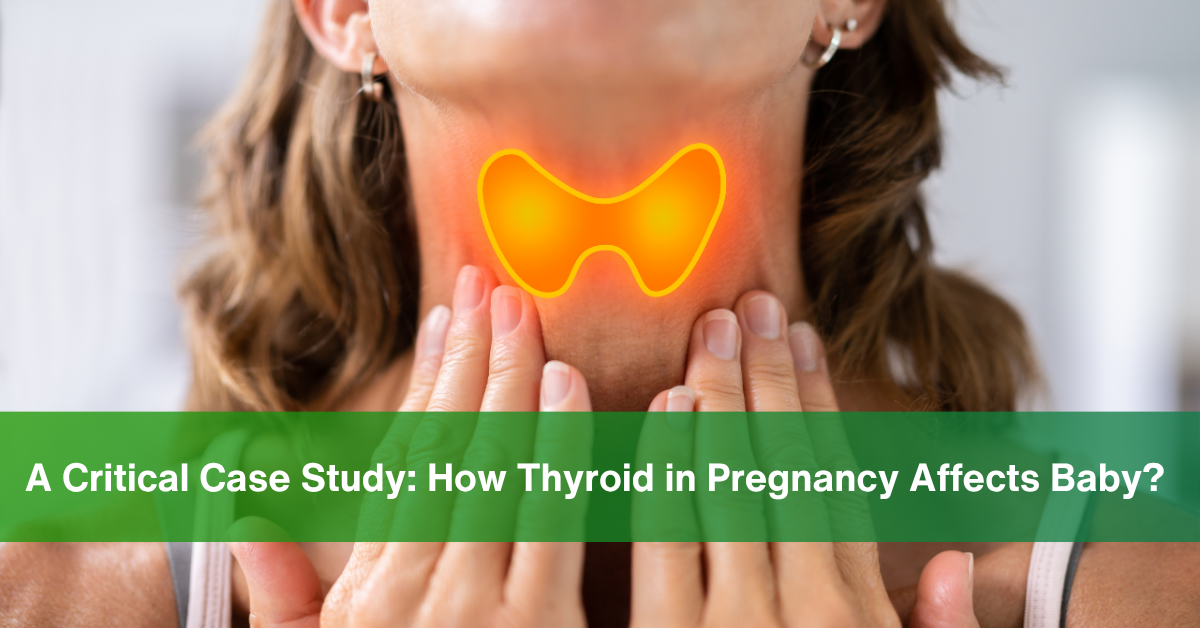
A young, anxious couple, Rahul (31) and Sneha (31), had conceived soon after their marriage.
Upon a routine growth scan around 28 weeks, her gynecologist found something unusual: a swelling in the baby’s neck along with excess amniotic fluid (polyhydramnios).
They were then referred to Dr. Deepthi Jammi around 29 weeks of pregnancy for a detailed evaluation and a second opinion.
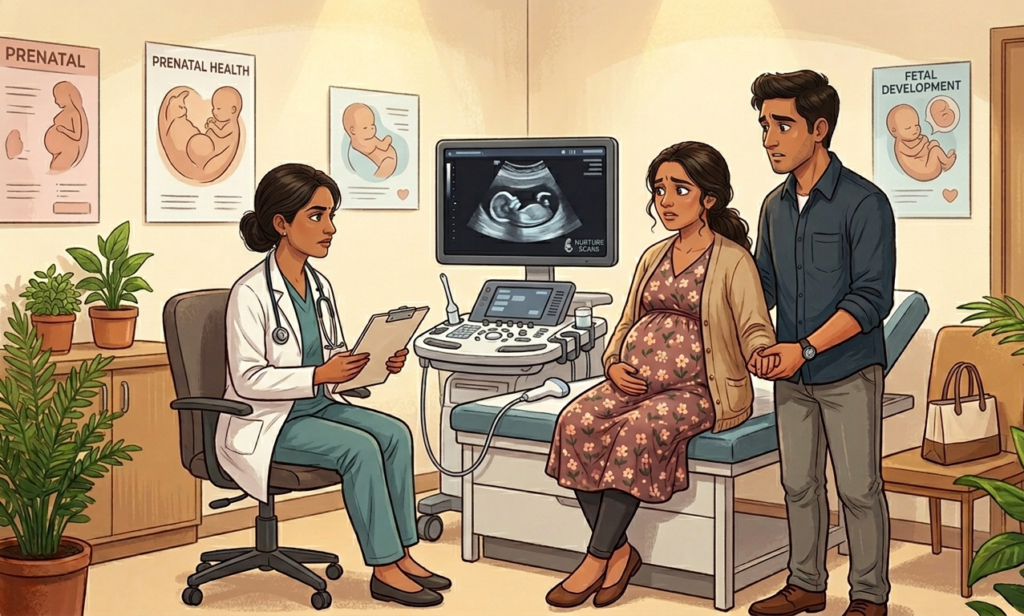
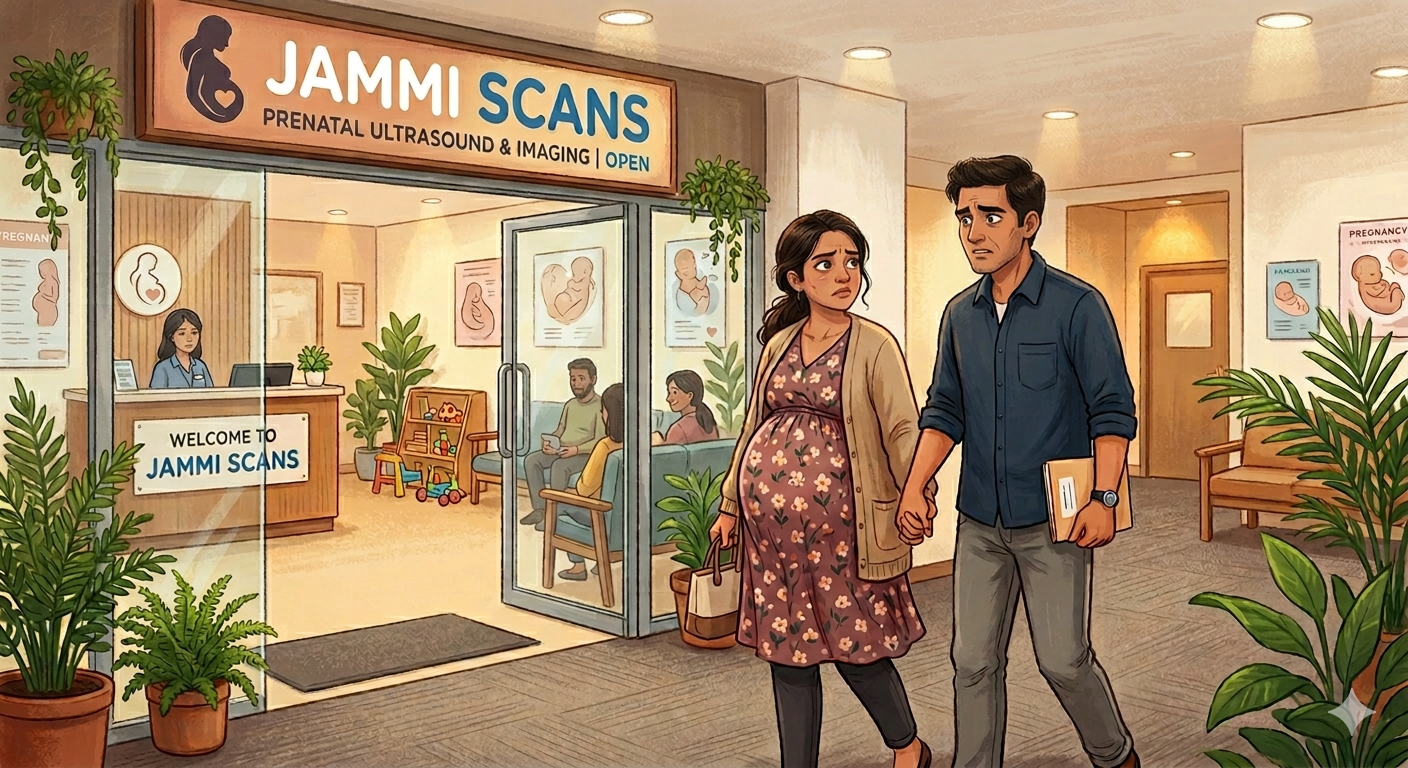
Then they visited Jammi Scans to meet Dr. Deepthi Jammi – a Fetal Medicine Specialist.
During their discussion with Dr. Deepthi Jammi, it was revealed that the mother had hyperthyroidism, and her TSH levels were extremely low.
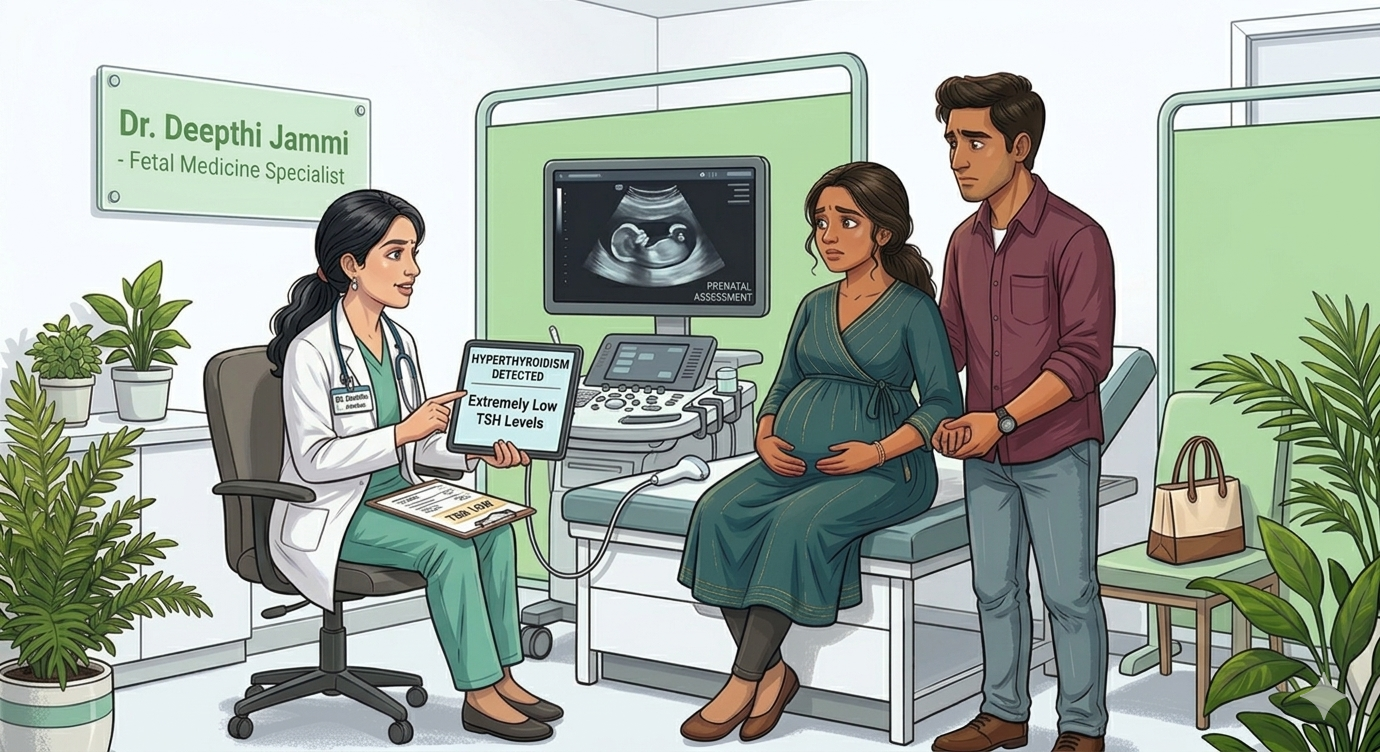
Unfortunately, her condition had been treated very aggressively, without appropriate follow-up monitoring. This imbalance had begun to affect the baby.
What We Found at Jammi Scans?
Upon consultation, Dr. Deepthi Jammi performed a detailed ultrasound evaluation and noticed a 2–3 cm enlargement of the baby’s thyroid gland, known as a fetal goiter.
The thyroid gland lies very close to the windpipe (trachea) and food pipe (esophagus) in the neck. Because of this swelling:
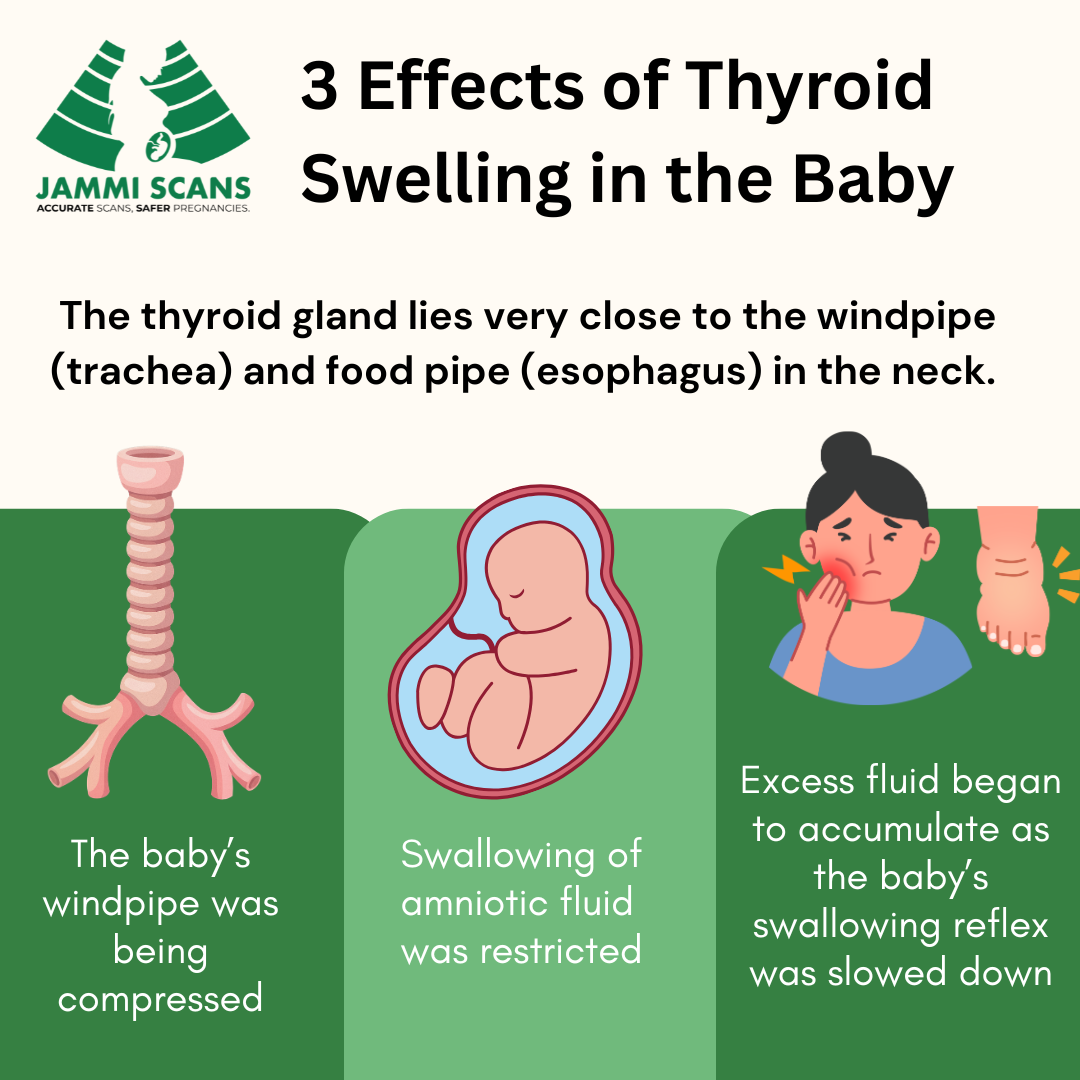
- The baby’s windpipe was being compressed
- Swallowing of amniotic fluid was restricted
- Excess fluid began to accumulate as the baby’s swallowing reflex was slowed down
This explained the polyhydramnios (excessive amniotic fluid) seen in the mother.
If left untreated, poorly controlled maternal hyperthyroidism can interfere with the baby’s brain development, a condition historically referred to as cretinism. The situation required timely care and management.
Our Step-by-Step Approach – Maternal Thyroid (Thyroid in Pregnancy)
Step 1: Counselling the expectant parents
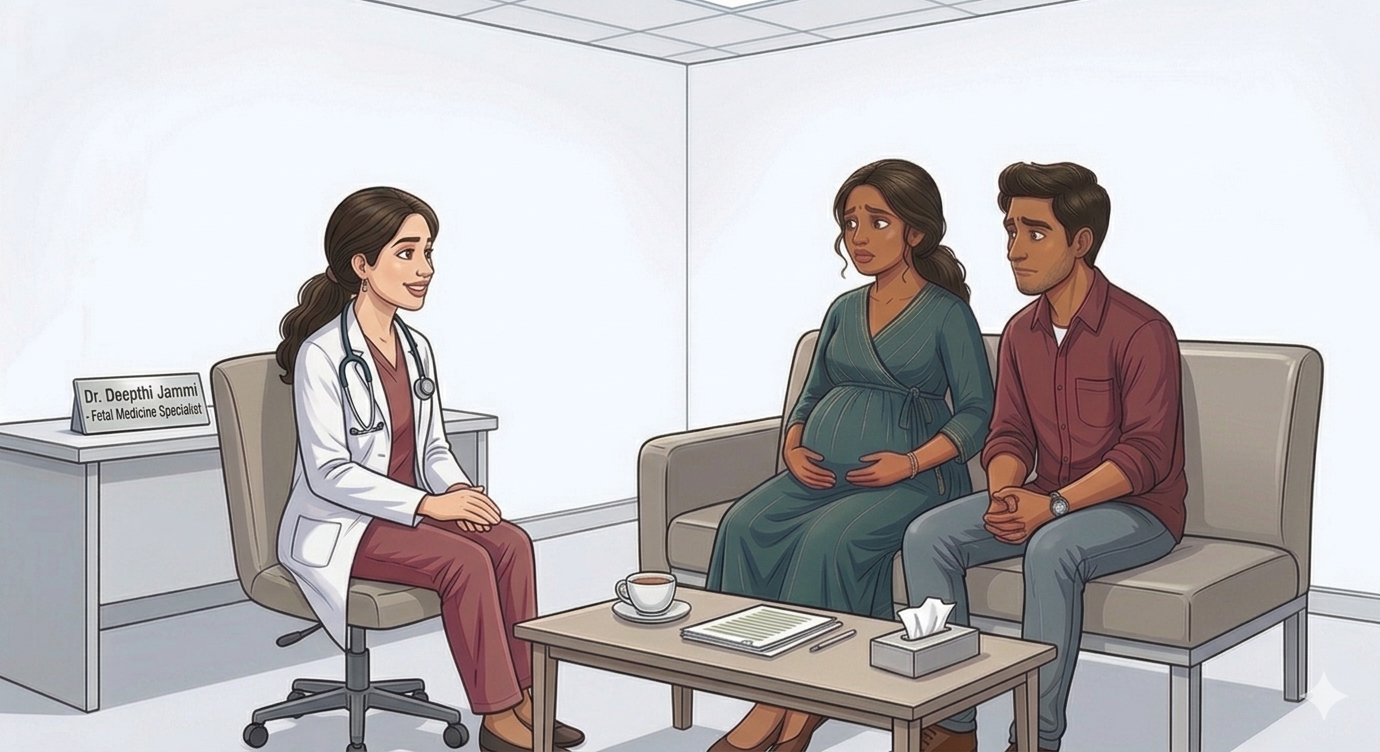
Dr. Deepthi Jammi clearly explained the condition and reassured the parents that, with proper management and timely care, the baby’s thyroid levels could be stabilized. This brought great reassurance and relief to the couple.

Step 2: Stabilizing the mother
The first and most important priority was correcting the mother’s thyroid levels, as this directly impacts the baby’s condition.
Dr. Deepthi Jammi, known for her collaborative care, consulted with a leading endocrinologist in Chennai and adjusted the mother’s thyroid medication dosage to stabilize her levels.
By around 32 weeks of pregnancy, her thyroid levels were under control. This was a crucial step toward reducing the baby’s thyroid swelling.
Step 3: Understanding the baby’s thyroid function
Next, it was important to confirm whether the baby’s enlarged thyroid was affecting its function. This could only be determined by checking the baby’s blood levels.
This required a highly precise procedure, fetal blood sampling under continuous ultrasound guidance.
Step 4: Challenges along the way
There were several challenges:
- The baby was over 32 weeks and highly active
- Excess amniotic fluid made targeting difficult
- The umbilical cord was not safely accessible (the preferred site for sampling)
- The mother had a low-lying placenta, making placental sampling unsafe.
Step 5: Procedure and relief
After carefully evaluating all challenges, the safest option was to draw blood from the baby’s portal vein (a liver vein).
This is a highly delicate and advanced fetal procedure, performed only when absolutely necessary.
As an FMF-certified fetal medicine specialist with over 15 years of experience, Dr. Deepthi Jammi successfully carried out the procedure despite these challenges.
The blood test report was processed within 3 hours, and the results brought immense relief.
The baby’s thyroid levels were completely normal.
This confirmed that correcting the mother’s thyroid imbalance had protected the baby from long-term harm.
Dr. Deepthi Jammi reassured the parents that:
- The baby’s IQ and long-term neurological development were unlikely to be affected
- The goiter would likely reduce over time
In a follow-up scan a few weeks later, the baby’s goiter had resolved, a delightful outcome.
A Happy Ending
At around 38 weeks (approximately 20 days ago), the baby girl, Tejal, was born healthy, with no neck swelling or complications. She is doing very well.
An Important Message for Expectant Mothers
This case highlights a crucial lesson:
- Pre-conception screening is important to identify conditions such as thyroid disorders before pregnancy
- Early diagnosis, close monitoring, and timely treatment can completely change outcomes
- With the right care at the right time, even complex situations can lead to healthy mothers and healthy babies.
FAQ
1. Does the mother’s thyroid affect the baby?
Yes, the mother’s thyroid levels can impact the baby’s brain development and nervous system.
Abnormal thyroid hormone levels may affect the baby. However, if the thyroid levels are well controlled with medication and lifestyle changes, most mothers with hypothyroidism or hyperthyroidism give birth to healthy babies.
2. Can babies get thyroid from their mother?
Yes, in some cases, thyroid hormones or thyroid-related antibodies from the mother can cross the placenta and affect the baby’s thyroid function. This may temporarily cause a thyroid imbalance in the baby.
However, this is more likely in mothers with uncontrolled thyroid conditions, and in most cases, it is temporary and resolves after birth with proper care.
If your thyroid levels are well controlled with appropriate medication, diet, and lifestyle changes, the chances of the baby being affected by thyroid-related issues are very low.
3. Will my baby be ok if I have hypothyroidism?
Yes, if your thyroid levels are under control. This is why it is crucial to opt for prenatal screening and take all the necessary blood tests to rule out issues such as thyroid disorders and diabetes, and keep them under control before planning for pregnancy to ensure a healthy pregnancy and childbirth.
Consult your doctor and have your thyroid levels checked at regular intervals to ensure the health and well-being of both you and your baby.