Table of Contents
ToggleSummary
Medically Reviewed by Dr. Deepthi Jammi (MS- OB/GYN – Fetal Medicine Specialist)
- Doctors may recommend a repeat anomaly scan if the first scan does not show clear results or if they want to monitor the baby more closely.
- Doing an anomaly scan twice is usually safe when recommended by a doctor, as it uses harmless sound waves (not radiation).
Introduction
An anomaly scan is an important ultrasound test done during pregnancy to check how the baby is developing.
It helps doctors look closely at the baby’s body parts such as the brain, heart, spine, bones, and other organs.
The main purpose of this scan is to identify any possible birth defects or structural abnormalities in the baby. It also helps doctors check the placenta, amniotic fluid, and the baby’s overall growth.
This scan is usually done in the second trimester, when the baby’s organs are developed enough to be seen clearly on ultrasound.
What is The Right Time for an Anomaly Scan?
An anomaly scan is usually done between 18 and 22 weeks of pregnancy, when the baby’s organs are developed enough to be examined clearly.
Can We Do an Anomaly Scan Twice?
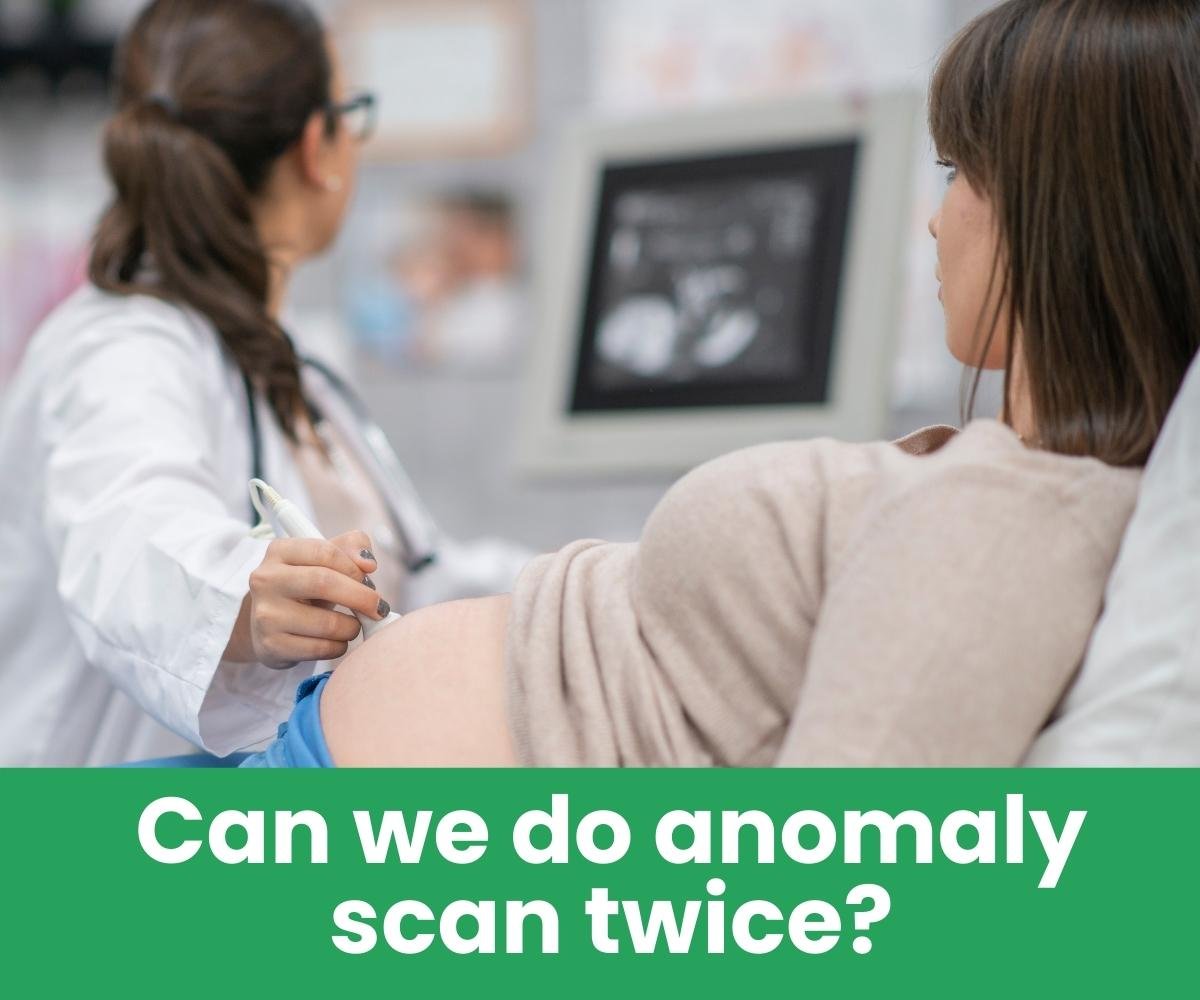
Yes, an anomaly scan can be done twice if a doctor recommends it. In some cases, the first scan may not provide clear images of the baby’s organs. To get a better view or confirm the results, doctors may suggest a repeat anomaly scan.
Is It Safe to Do an Anomaly Scan Twice?
Yes, it is generally safe to do an anomaly scan twice.
- Ultrasound scans use sound waves and not radiation.
- They are considered safe for both the mother and the baby when performed by trained professionals.
Why Might a Doctor Recommend a Second Anomaly Scan?
- The baby’s position during the first scan may make it difficult to clearly see certain organs or body parts.
- The doctor may want to confirm certain findings seen in the first scan.
- The scan may be repeated to monitor the baby’s growth and development.
What Happens If You Miss the Anomaly Scan?
- The doctor may not get a detailed view of the baby’s organs.
- Some structural abnormalities may not be detected early.
- It may make it harder to monitor the baby’s development during the second trimester.
- The doctor may suggest another ultrasound later in pregnancy to check the baby’s growth.
Can Abnormalities Develop After the First Anomaly Scan?
Yes, some abnormalities can develop or become noticeable after the first anomaly scan as the baby continues to grow.
Examples of abnormalities that may appear later:
- Baby is growing slower than expected
- Fluid building up in or around the baby’s body
- Changes in brain development
- Kidney or urinary-related conditions
- Heart function
- Too much or too little amniotic fluid around the baby
Can an Early Anomaly Scan Detect Birth Defects?
Yes, an early anomaly scan helps detect certain birth defects and structural anomalies early on and help the expectant parents make informed decisions and plan for medical management.
While a routine anomaly scan is carried out between 18 and 22 weeks of pregnancy, an early anomaly scan, also called an early target scan, is usually performed between 12 and 18 weeks.
Although this scan is not routinely recommended for all expectant mothers, it is crucial for those with:
- High-risk pregnancies
- A history of congenital anomalies
- Abnormal findings in earlier scans
- Increased risk identified through screening tests.
How Accurate is an Anomaly Scan?
While an anomaly scan can be up to 90% accurate in detecting major structural abnormalities in the fetus including conditions affecting the spine, heart, kidneys, and limbs. But it is not 100% accurate.
This is because several factors can influence the accuracy of the scan, such as the baby’s position, visibility during the scan, and the amount of amniotic fluid present.
However, an anomaly scan remains a very important pregnancy ultrasound scan, as it helps rule out most structural abnormalities, allowing expectant parents to make informed decisions and seek timely medical care.
Conclusion
An anomaly scan is an important ultrasound test that helps doctors check the baby’s growth and development during pregnancy.
In some cases, doctors may suggest another anomaly scan when the first one doesn’t provide clear views or when additional monitoring of the baby is required.
Regular prenatal checkups and timely scans help doctors monitor the baby’s development and provide the right care throughout the pregnancy.
For a detailed anomaly scan, visit Jammi Scans. Dr. Deepthi Jammi personally conducts the scan to assess the baby’s organs and growth, and explains the results in a simple and reassuring way to expectant mothers.
Call 7338771733 to book your appointment today.
FAQ
1. Can We Do an Anomaly Scan in 7 Months?
While an anomaly scan is usually carried out between 18 and 22 weeks of pregnancy, a follow-up scan may be performed in the 7th month if your fetal medicine specialist wants to monitor the baby more closely.
In some cases, if the expectant mother has missed the anomaly scan during the 18–22 week period, she can consult with her doctor and undergo a detailed scan later.
However, it is important to keep in mind that taking an anomaly scan later than 22 weeks makes it harder for healthcare providers and expectant parents to make crucial decisions.
This is because the baby would have grown further, and certain findings may be harder to manage.
2. What is the Rule of 3 Anomaly Scans?
The “Rule of 3” anomaly scan is a simple method doctors use during a fetal ultrasound to make sure everything is checked properly.
It involves looking at the baby in three important views or planes for better clarity.
For example, the baby’s heart is examined in three views, and the head is also checked from three different angles.
This approach helps doctors get a more complete picture and improves the chances of detecting any structural abnormalities early.
3. Up to Which Week Can an Anomaly Scan Be Done?
Ideally, an anomaly scan is carried out between 18 and 22 weeks of pregnancy. However, in some cases, doctors may recommend a repeat scan around 24 weeks as well.
For those who have missed their anomaly scan during the 18–22 week window, it is advisable to schedule the scan as soon as possible, as it is crucial for detecting any structural anomalies in the baby.

Reviewed by Dr. Deepthi Jammi - Fetal Medicine Specialist
Dr. Deepthi Jammi (Director, Jammi Scans) is a qualified OB/GYN and Post-Doc in Maternal Fetal Medicine. As a pregnancy ultrasound expert, she is passionate about healthy pregnancies and works towards spreading awareness on the latest diagnostic options available for parents to choose from. Dr.Deepthi has received gold medals and awards in Fetal Medicine at international and national conferences, and has appeared in numerous prestigious regional magazines and TV interviews.