Table of Contents
ToggleSummary
Medically Reviewed by Dr. Deepthi Jammi (MS – OB/GYN – Fetal Medicine Specialist)
- An anomaly scan, usually done between 18 and 22 weeks, helps your doctor examine your baby’s organ development and plan timely medical support, making it an important part of routine prenatal screening.
- Skipping an anomaly scan may mean missing the early detection of certain conditions that can be managed or treated effectively.
Introduction
Pregnancy comes with a long list of tests and scans, and it’s natural to wonder – are all of them really necessary?
One scan that often raises questions is the anomaly scan. Is an anomaly scan necessary? Does it actually play a crucial role in your baby’s health?
Let’s understand.
Consult Dr. Deepthi Jammi – Get An Appointment Today
Is an Anomaly Scan Necessary in Pregnancy?
Yes, it is strongly recommended as part of routine pregnancy care.
Between 18 and 22 weeks, your baby’s organs are developed enough for a detailed check, making it the best time to assess your baby’s growth.
Research shows that fetal abnormalities affect up to 3% of pregnancies, and the anomaly scan is considered the gold standard for detecting these abnormalities.
Early detection can also reduce complications after birth and lower the risk of infant health issues.
Why is an anomaly scan important? / Why Do Doctors Recommend an Anomaly Scan?
Doctors recommend this scan because it provides a detailed evaluation of your baby’s body.
The Anomaly scan can check for various conditions that may affect your baby’s health and development, such as
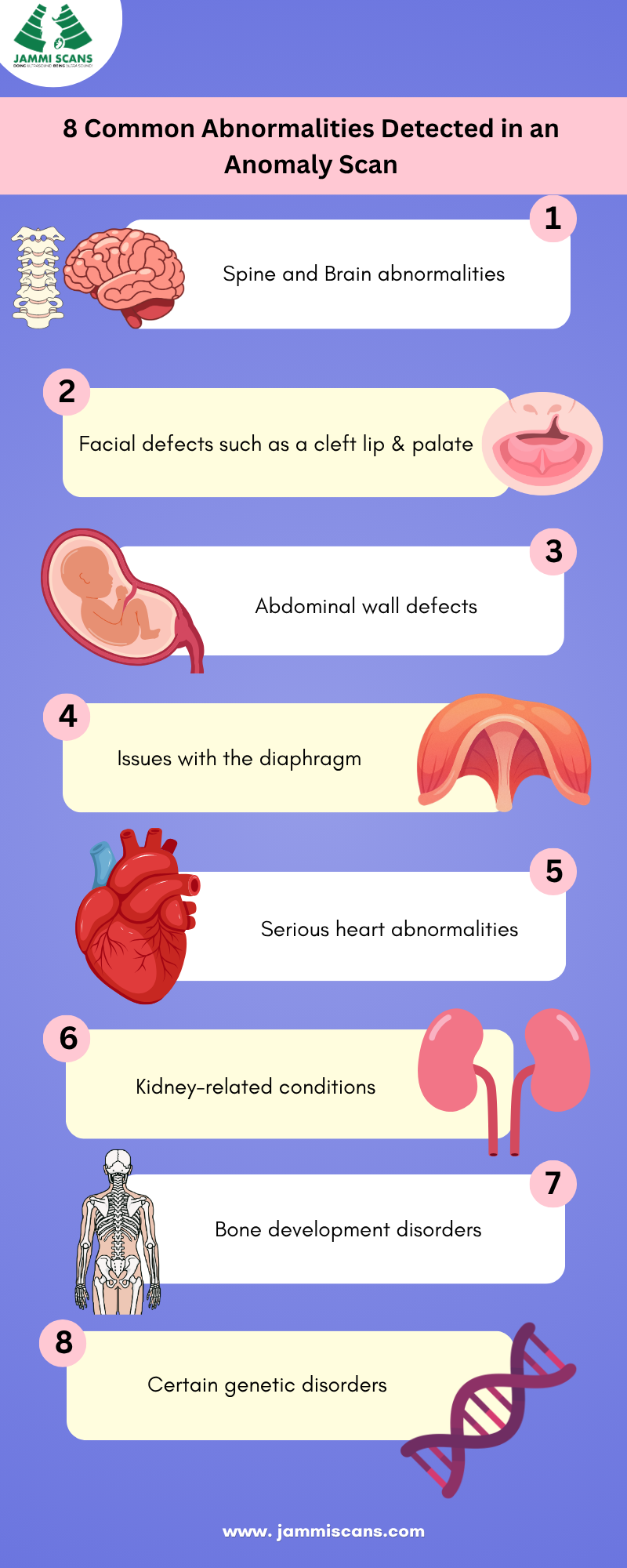
- Brain and spine abnormalities
- Facial defects such as a cleft lip and palate
- Abdominal wall defects
- Issues with the diaphragm
- Serious heart abnormalities
- Kidney-related conditions
- Bone development disorders
- Certain genetic disorders
Early detection helps doctors plan proper care during pregnancy and after birth, and helps parents make informed decisions.
What Happens If you Skip an Anomaly Scan?
Skipping an anomaly scan means you might miss important information about your baby’s health.
Without this scan:
- You may miss detecting certain structural abnormalities before birth
- You may not get important information about your baby’s growth or the placenta
If a condition is found early, your doctor can monitor it closely, plan treatment, and prepare the right care at delivery. But skipping the anomaly scan may limit these options.
Who Should Definitely Not Miss an Anomaly Scan?
An anomaly scan is recommended for all pregnancies. But it should definitely not be missed for women in the high-risk category. This includes;
- Women with pre-existing conditions like high blood pressure, diabetes, heart issues, thyroid disorder, anaemia, or HIV.
- Who are overweight or obese.
- Women with multiple pregnancies.
- Very young mothers and women aged 35 and above.
- Who had past complications like birth defects or miscarriages.
- Women with a family history of genetic and congenital anomalies.
What happens if the anomaly scan detects an abnormality?
Your doctor may suggest the following next steps to manage the situation:
- Follow-up scan.
- Advanced imaging, such as a fetal MRI, to confirm the finding and assess its severity.
- Tests like amniocentesis, chorionic villus sampling (CVS), cordocentesis, or Non-invasive Prenatal Testing (NIPT) to assess the risk of certain genetic abnormalities.
- Counselling from a fetal medicine specialist to discuss the diagnosis and the possible treatment options.
- If your baby may need immediate care after birth, doctors will plan delivery at a hospital with the right facilities.
Conclusion
So, is an anomaly scan necessary? The answer is a clear ‘yes’.
When performed by a fetal medicine specialist, the scan can make a real difference, as even subtle findings that might otherwise be missed can be identified early.
Dr. Deepthi Jammi, an experienced fetal medicine specialist at Jammi Scans, combines advanced diagnostic tools with expert evaluation and modern fetal care approaches to guide you towards the safest and most suitable care for you and your baby.
To discuss your concerns or schedule your anomaly scan, contact 7338771733 and book an appointment.
FAQ
1. Do I need an anomaly scan if the NT scan is normal?
Yes, you still need an anomaly scan even if your NT scan (done between 11–14 weeks) is normal. The NT scan mainly checks the risk of chromosomal defects, whereas the anomaly scan (done between 18-22 weeks) examines your baby’s organ development in detail.
2. Can an anomaly scan determine the baby’s growth and weight?
Yes, an anomaly scan determines your baby’s growth and provides an estimated weight by measuring key parameters like the head size, abdominal circumference, and thigh bone length.
3. Will I get the anomaly scan report on the same day?
Mostly, the report is provided on the same day. At Jammi Scans, you will receive your scan report within a few minutes of completing the scan.
4. Can I eat before going for an anomaly scan?
Yes, you can eat before going for an anomaly scan, as fasting is not required for this test.
5. Will skipping the anomaly scan affect my baby?
Skipping the anomaly scan doesn’t directly harm your baby, but it may mean missing the early detection of certain conditions that, if identified in time, could be managed better.
Reviewed by Dr. Deepthi Jammi - Fetal Medicine Specialist
Dr. Deepthi Jammi (Director, Jammi Scans) is a qualified OB/GYN and Post-Doc in Maternal Fetal Medicine. As a pregnancy ultrasound expert, she is passionate about healthy pregnancies and works towards spreading awareness on the latest diagnostic options available for parents to choose from. Dr.Deepthi has received gold medals and awards in Fetal Medicine at international and national conferences, and has appeared in numerous prestigious regional magazines and TV interviews.