Table of Contents
ToggleIs High-Risk Pregnancy Ultrasound Safe for Your Baby?
Summary
- High-risk pregnancy ultrasounds are crucial for closely monitoring the well-being of both the mother and the baby.
- Mothers with high-risk pregnancies often require more frequent ultrasounds than those with low-risk pregnancies.
- Consulting an FMF-certified fetal medicine specialist is vital, as they accurately interpret the results and guide parents on the next steps.
Introduction
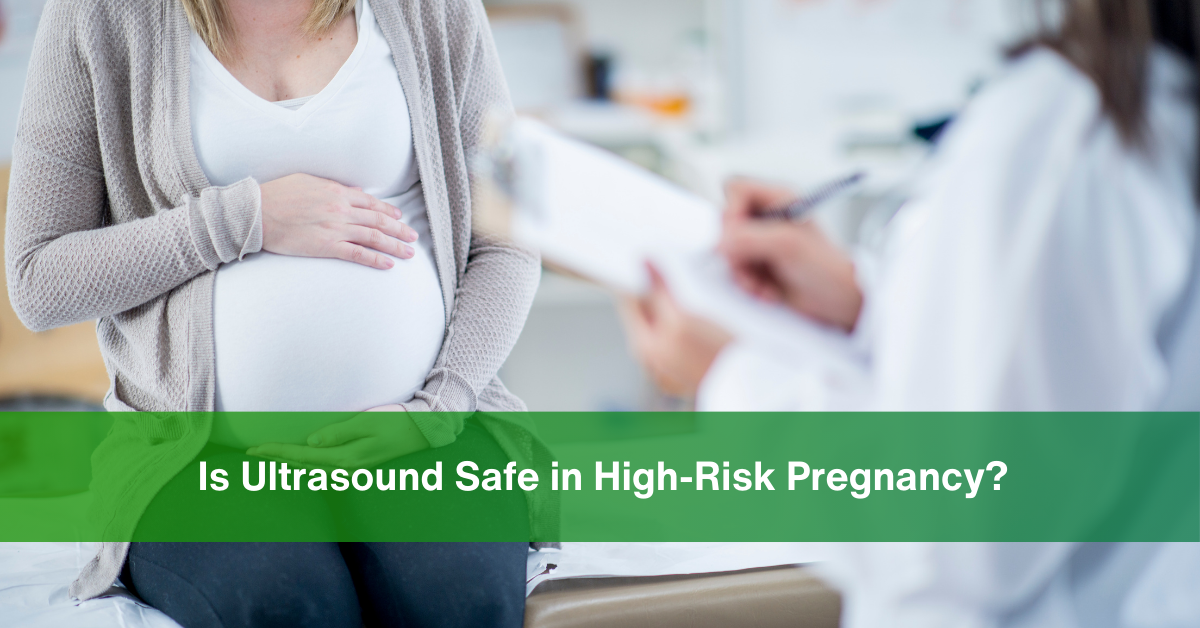
Hearing the term “high-risk pregnancy” can be scary. However, with today’s advanced ultrasound technology and the guidance of fetal medicine specialists, your healthcare team can closely monitor both you and your baby—helping you navigate the pregnancy journey with clarity, confidence, and reassurance.
While a mother with a low-risk pregnancy usually requires around 5–6 ultrasound scans, those with a high-risk pregnancy may need more frequent scans to closely monitor the well-being of both the mother and the baby.
This blog covers everything you need to know about high-risk pregnancy ultrasounds.
What Is a High-Risk Pregnancy Ultrasound?
A high-risk pregnancy ultrasound is a specialised imaging scan performed when the mother, the baby, or both require extra monitoring due to medical or pregnancy-related risk factors.
These scans help doctors identify potential concerns early and plan appropriate care.
How Often Are Ultrasounds Done in High-Risk Pregnancies?
While a low-risk pregnancy typically requires an average of 5–6 scans, high-risk pregnancies may require ultrasounds every two weeks or even weekly, depending on the mother’s health condition and the baby’s needs.
What Types of Scans Are Used in High-Risk Pregnancy?
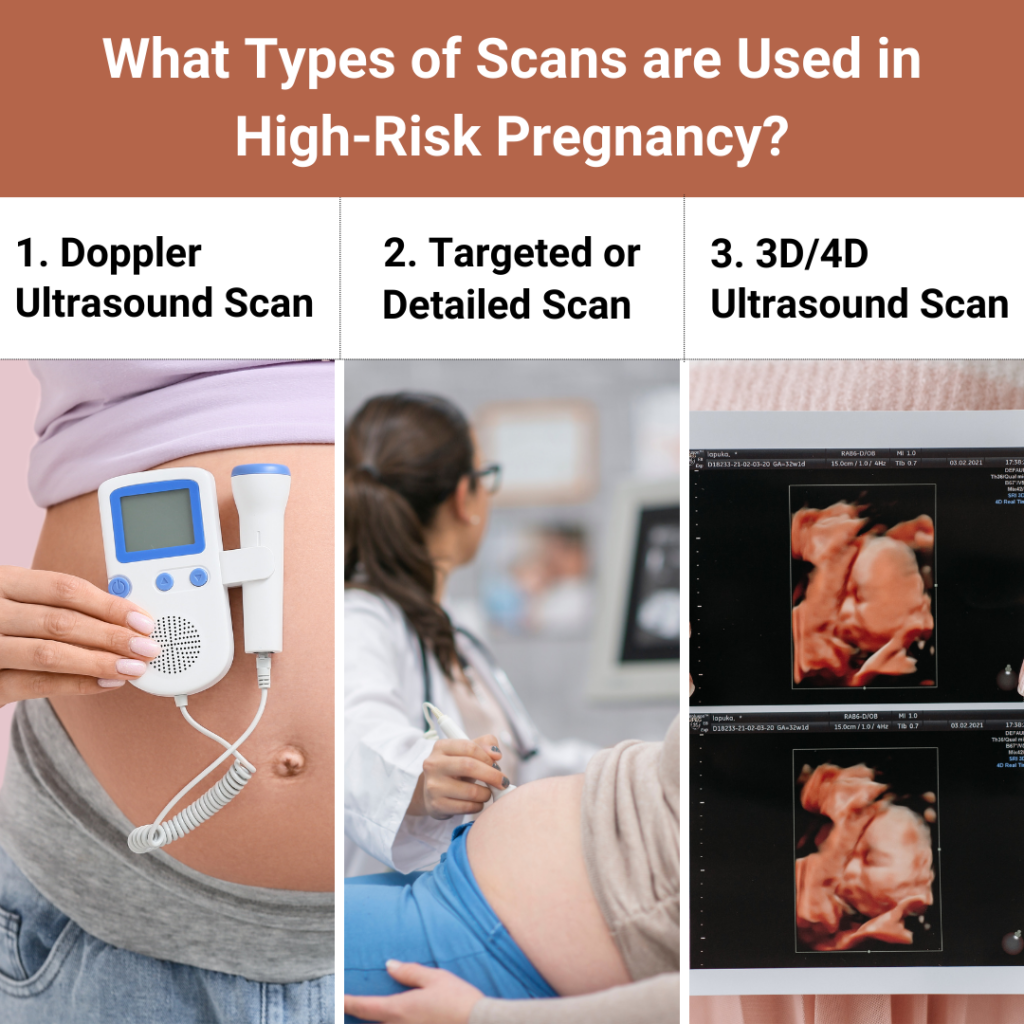
1. Doppler Ultrasound
A Doppler scan assesses blood flow in the placenta, umbilical cord, and fetal blood vessels. It helps determine whether the baby is receiving adequate oxygen and nutrients.
2. Targeted or Detailed Scan (Anomaly Scan)
A detailed structural analysis performed by a fetal medicine specialist to closely evaluate the baby’s anatomy, growth, and development.
3. 3D/4D Ultrasound (when needed)
Used to obtain clearer images of the baby’s structures, especially for assessing facial features, limbs, and spinal anomalies.
Are Multiple Ultrasounds Safe for the Baby in a High-Risk Pregnancy?
Yes. Ultrasound uses sound waves, not radiation, and is considered safe for both the mother and the baby when performed by trained and qualified professionals.
What Happens if the High-Risk Ultrasound Shows Abnormal Results?
If an abnormality is detected, the fetal medicine specialist will guide you through the next steps. In some cases, closer follow-up scans may be recommended to monitor the baby’s growth and condition.
In other situations, additional tests such as advanced ultrasound evaluations, Doppler studies, or prenatal diagnostic tests like amniocentesis or CVS may be advised, depending on the findings.
This is why consulting an FMF-certified fetal medicine specialist is crucial. They are trained to accurately interpret complex findings, explain results in simple terms, and guide parents through the most appropriate next steps—ensuring informed decision-making and the best possible care for both mother and baby.
Conclusion
For those with a high-risk pregnancy, ultrasound scans play a critical role in closely monitoring the well-being of both the mother and the baby.
Under the guidance of an expert fetal medicine specialist, high-risk pregnancies can be managed effectively, and many mothers go on to deliver healthy babies.
At Jammi Scans, high-risk pregnancy ultrasounds are performed and interpreted by Dr. Deepthi Jammi, an FMF-certified fetal medicine specialist, ensuring detailed evaluations, clear explanations, and appropriate guidance at every step.
If you have a high-risk pregnancy or have been advised to undergo a high-risk pregnancy ultrasound, book your scan at Jammi Scans for expert fetal assessment and compassionate care for you and your baby.
FAQ
1. Do I need a specialist for a high-risk pregnancy scan?
Yes. It is important to consult a fetal medicine specialist to closely monitor the baby’s well-being and guide you through the next steps of care.
2. Are multiple ultrasounds safe for the baby in a high-risk pregnancy?
Yes. Ultrasound uses sound waves, not radiation, and is considered safe when performed by a trained and qualified professional.
Best Fetal Medicine Specialist for High-Risk Scan Near Me
Jammi Scans is a trusted scan centre for those looking for an experienced fetal medicine specialist for high-risk pregnancy scans. The centre is led by Dr. Deepthi Jammi, an FMF-certified fetal medicine specialist, known for her friendly approach and clear communication with patients.
Dr. Deepthi Jammi believes in explaining scan findings in a simple and reassuring manner, helping expectant parents understand their reports and feel confident about the next steps.

Reviewed by Dr. Deepthi Jammi - Fetal Medicine Specialist
Dr. Deepthi Jammi (Director, Jammi Scans) is a qualified OB/GYN and Post-Doc in Maternal Fetal Medicine. As a pregnancy ultrasound expert, she is passionate about healthy pregnancies and works towards spreading awareness on the latest diagnostic options available for parents to choose from. Dr.Deepthi has received gold medals and awards in Fetal Medicine at international and national conferences, and has appeared in numerous prestigious regional magazines and TV interviews.