

Table of Contents
ToggleSummary
Medically Reviewed by Dr. Deepthi Jammi (MS- OB/GYN – Fetal Medicine Specialist)
- Very early pregnancy signs can begin even before a missed period in some women.
- Common early symptoms include mild spotting, breast tenderness, fatigue, nausea, and frequent urination.
- However, the only reliable way to confirm pregnancy is by taking a pregnancy test after a missed period.
Introduction
Sometimes pregnancy doesn’t announce itself with a missed period — it begins with subtle signs like breast tenderness, nausea, and fatigue.
These small early hints can appear just a few days after conception, even before you expect your next period. This blog covers everything you need to know about the very early signs of pregnancy.
When do you start feeling pregnant?
For some expectant mothers, pregnancy symptoms can begin as early as 1-2 weeks after conception, as soon as the hCG hormone starts to rise.
Timeline:
- Ovulation – Occurs around day 14 for those with a 28-day cycle
- Fertilisation – Occurs within 24 hours of ovulation
- Implantation – Occurs within 6–10 days of fertilisation
- hCG starts rising – Begins after implantation
- Symptoms may begin – Typically around the time of your expected period
Although some women experience early pregnancy symptoms as soon as a week after implantation, others may not notice anything until 5–6 weeks.
8 Common Very Early Signs of Pregnancy
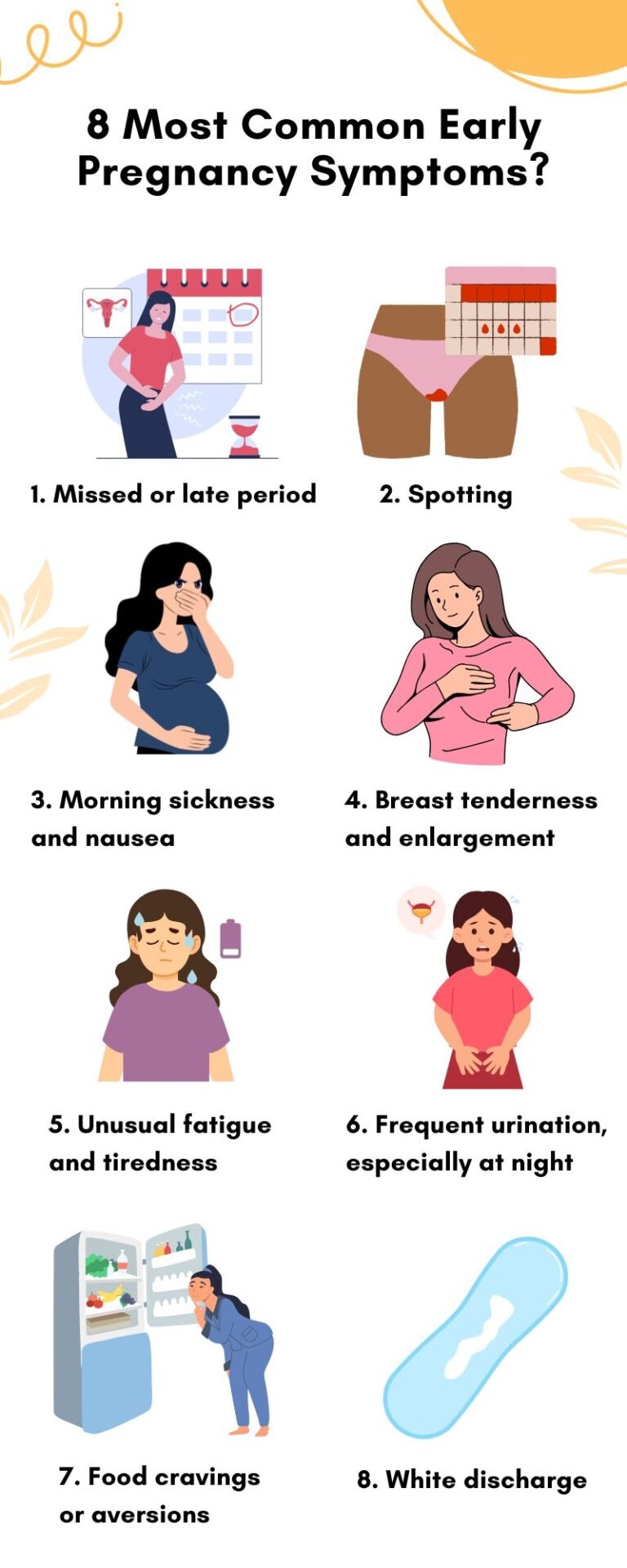
1. Missed/Late period: A missed or a late period is one of the most common very early signs of pregnancy.
2. Spotting/ Implantation Bleeding: Mild spotting around the time of implantation occurs in about 25% of women.
3. Nausea or Morning Sickness: Nausea is one of the most common first trimester symptoms that many expectant mothers experience. In fact, some women may notice nausea even before their expected period, making it one of the earliest signs of pregnancy.
4. Breast Tenderness or Heaviness:
Around 6-12 days of fertilization, hCG levels start rising. This can lead to soreness and tenderness of breasts.
5. Fatigue and Excessive Sleepiness: High progesterone levels in early pregnancy cause tiredness and increased sleepiness.
6. Frequent Urination: Rising hCG can cause increased urination from as early as 6–10 days after conception.
7. Food cravings or aversion: Early pregnancy affects metabolism, leading to either increased hunger or reduced appetite.
8. White Discharge (Increased Cervical Mucus): Can discharge signal pregnancy? Yes. Milky white, sticky, or creamy discharge is common after implantation.
Other Common Signs of Early Pregnancy
Apart from these, there are a few other very early signs of pregnancy that some expectant women notice even before a missed period such as:
9. Bloating and Gas
Progesterone slows digestion, causing bloating and gas.
10. Mild Abdominal Cramps
Period-like cramps are common around implantation and as the uterus begins to stretch.
11. Implantation Cramps Implantation occurs around 6–10 days after fertilisation and can cause mild cramps or a pulling/pinching sensation.
Am I pregnant or just overthinking?
It is always advisable to take a pregnancy test after 5-7 days of your missed period to get accurate results. If unsure, consult with your gynaecologist.
Early Pregnancy Symptoms (Week 1 – 6)
Early Pregnancy — Week-by-Week (Weeks 1 to 6)
A simple guide to what happens each week and the symptoms you may notice.
| Pregnancy Week | What’s Happening | Possible Symptoms |
|---|---|---|
| Week 1 (Begins from the first day of your last period) |
Not pregnant yet. Your body sheds the uterine lining as part of the menstrual cycle. | Abdominal cramps, bloating, mild fatigue. |
| Week 2 (Follicular phase) |
Your body prepares for ovulation as follicles mature. | No noticeable pregnancy symptoms yet. |
| Week 3 (Ovulation, fertilisation & implantation) |
Ovulation occurs. Fertilisation may happen within 24 hours. The fertilised egg may implant. | Light spotting (implantation bleeding), mild cramps, bloating, or no symptoms. |
| Week 4 (Around missed period) |
hCG begins to rise after implantation. Pregnancy can be detected through a test. | Fatigue, breast tenderness, nausea, mood changes. |
| Weeks 5–6 (Early pregnancy symptoms increase) |
hCG and progesterone levels rise. Early embryo development continues. | Morning sickness, frequent urination, food aversions, breast changes, mood swings. |
Book your Early Pregnancy Scan with Dr. Deepthi Jammi Today
Normal vs Abnormal Early Pregnancy Symptoms
| Normal Early Pregnancy Symptoms | Abnormal Early Pregnancy Symptoms |
|---|---|
| Mild abdominal cramps | Severe one-sided abdominal pain |
| Light spotting | Heavy bleeding |
| Increase white discharge | Foul smelling discharge |
| Fatigue / Increased sleepiness | Shoulder pain |
| Mild increase in body temperature | Severe fever |
| Bloating or gas | Breathlessness |
| Breast tenderness | Blurred vision |
| Mild dizziness | Severe dizziness / Fainting |
| Hunger changes | Persistent & severe headache |
PMS Vs Early Pregnancy Symptoms
Most early pregnancy symptoms are often similar to those of PMS, making them difficult to distinguish.
However, certain symptoms such as mild dizziness, changes in hunger, and increased sleepiness lean more towards early pregnancy than PMS.
It is important to remember that pregnancy symptoms before a missed period are often considered less reliable.
Hence, it is important to take a pregnancy after a missed period to confirm pregnancy.
Top 5 Weird Early Pregnancy Symptoms
Apart from the well-known pregnancy symptoms, there are also a few weird or uncommon symptoms that can occur, including:

- Metallic taste in mouth (dysgeusia)
- Heightened sense of smell
- Nasal congestion
- Strange vivid dreams
- Sudden food aversions
When Should You Take a Pregnancy Test?
It is recommended to take a pregnancy test at least one week after your missed period using the first urine of the day for the most accurate results.
Why Do Some Women Have No Symptoms of Early Pregnancy?
Some expectant mothers notice pregnancy symptoms only after 6–7 weeks, and some may not experience typical symptoms like vomiting or nausea. Reasons include:
- Slower rise of hCG
- Previous pregnancies (body may adapt quickly)
- Sleep, health, and nutrition status
Remember, no two pregnancies are the same.
When to See a Doctor?
Seek medical help immediately if you experience this in your early pregnancy:
- Severe abdominal pain
- Heavy bleeding
- Sharp one-sided abdominal pain
- Shoulder tip pain
- Blurry vision
Conclusion
The two-week wait can be stressful for those trying to conceive, but remember that every pregnancy is unique.
Not everyone experiences symptoms at the same time or in the same way. If you suspect pregnancy, take a test at least 5 days after your missed period for reliable results.
An early pregnancy scan is one of the most important steps to confirm pregnancy, locate the pregnancy, and detect the baby’s heartbeat and viability.
Call 7338771733 to schedule your early pregnancy scan at Jammi Scans. Dr. Deepthi Jammi ensures every expectant mother receives attentive and compassionate care.
FAQ
1. How soon do pregnancy symptoms start?
Some women notice changes as early as 6–10 days after fertilisation, while others may not notice anything until after a missed period.
2. Can you have pregnancy symptoms before a missed period?
Yes. It is possible for some expectant mothers to experience early pregnancy symptoms even before a missed period. Symptoms such as breast tenderness, spotting, and fatigue can occur beforehand.
3. What does implantation bleeding feel like?
Implantation bleeding usually appears as light pink or brown spotting that lasts for a few hours to a couple of days — and is much lighter and shorter than a normal period.

Reviewed by Dr. Deepthi Jammi - Fetal Medicine Specialist
Dr. Deepthi Jammi (Director, Jammi Scans) is a qualified OB/GYN and Post-Doc in Maternal Fetal Medicine. As a pregnancy ultrasound expert, she is passionate about healthy pregnancies and works towards spreading awareness on the latest diagnostic options available for parents to choose from. Dr.Deepthi has received gold medals and awards in Fetal Medicine at international and national conferences, and has appeared in numerous prestigious regional magazines and TV interviews.