Table of Contents
ToggleSummary
Medically Reviewed by Dr. Deepthi Jammi, MS (OB/GYN), Fetal Medicine Specialist – 15+ Years Experience
- Anterior Vs Posterior placenta are two common types of placental positions during pregnancy.
- Both anterior and posterior placental positions are normal and generally do not pose any harm to the mother or the baby.
- Routine pregnancy scans including anomaly scan and growth scans help monitor placental position and help identify conditions such as low-lying placenta or placenta previa that may require close monitoring.
Introduction
During routine scans such as the anomaly scan, and growth scan, the position of the placenta is assessed and is mentioned in the report.
The terms anterior placenta and posterior placenta are commonly used to describe these positions. This blog explains everything you need to know about anterior vs posterior placenta in your scan report.
What is the Placenta?
The placenta is an important organ that develops in the uterus during pregnancy.
It is attached to the wall of the uterus and provides oxygen and nutrients to the fetus through the umbilical cord.
The umbilical cord is the connection between the fetus and the placenta.
What Does Placenta Position Mean?
Placental position means the location of the placenta in the uterus, typically at the top, front, or back.
The placental position is usually checked during scans, including the anomaly scan, and growth scan, as it helps doctors understand how the pregnancy is progressing.
6 Common placental positions during pregnancy
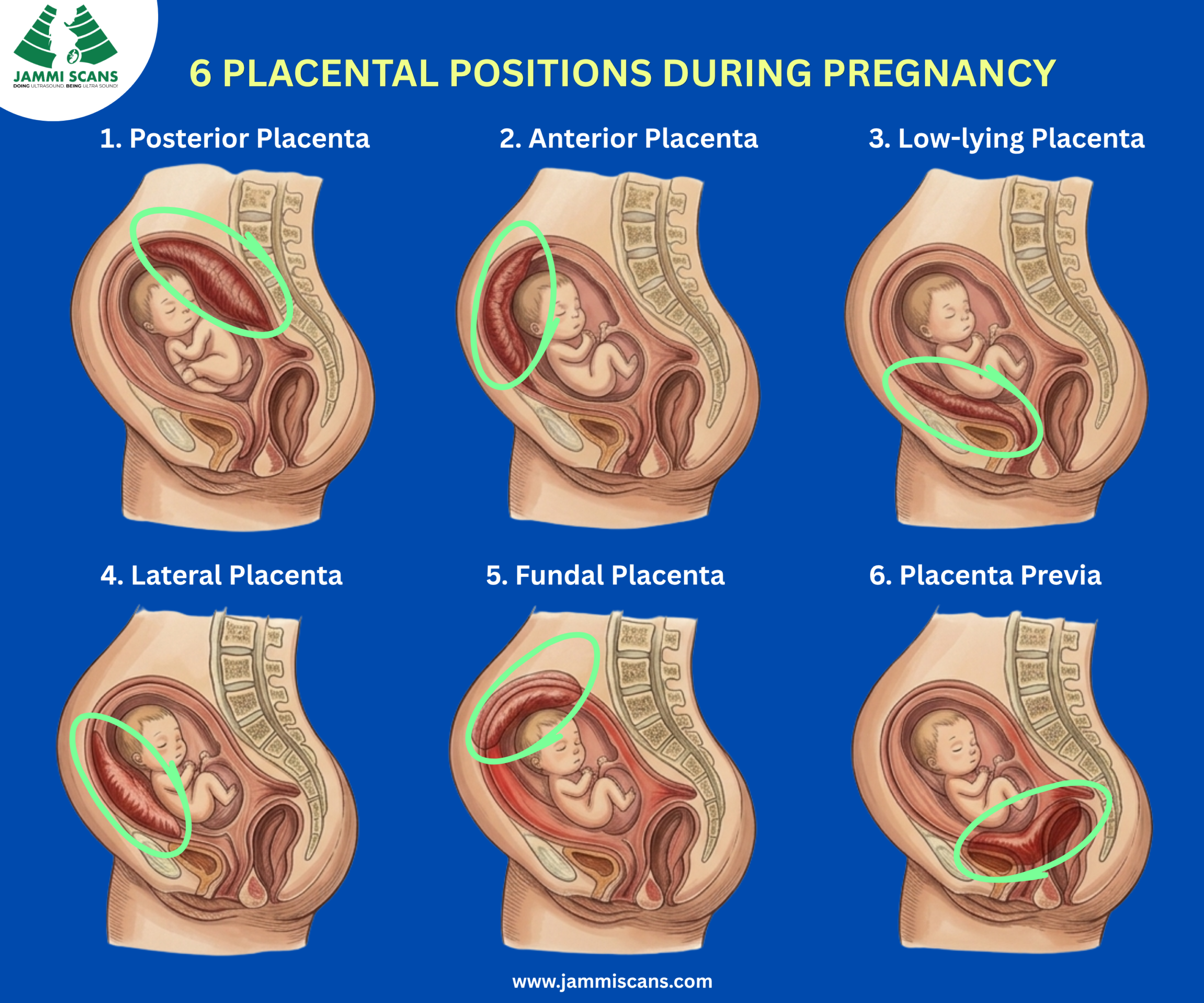
- Posterior placenta: Back side of the uterus
- Anterior placenta: Front side of the uterus
- Low-lying placenta: Lies close to the cervix (mouth of the uterus) but does not cover it
- Lateral placenta: Left side or right side of the uterus
- Fundal placenta: Top of the uterus
- Placenta previa: Partially or fully covers the cervix
Difference Between Anterior vs Posterior Placenta
| Feature | Anterior Placenta | Posterior Placenta |
|---|---|---|
| Position | Front side of the uterus (in front of the baby) | Back side of the uterus (behind the baby) |
| Baby movements | Can be felt a little later or gentler | Can be felt earlier and stronger |
| Scan visibility | Can block the view of certain organs | Usually doesn’t block the view of any organs |
| Risk | Usually low | Usually low |
Which is better – Anterior or posterior placenta?
Both anterior and posterior placental positions are normal and do not affect the baby in any way. However, an anterior placenta can make the baby’s movements feel slightly lighter.
Placental Positions: When Should You Be Concerned?
Anterior and posterior placentas are usually normal and do not cause problems during pregnancy. However, it is crucial to seek medical help if you experience symptoms such as:
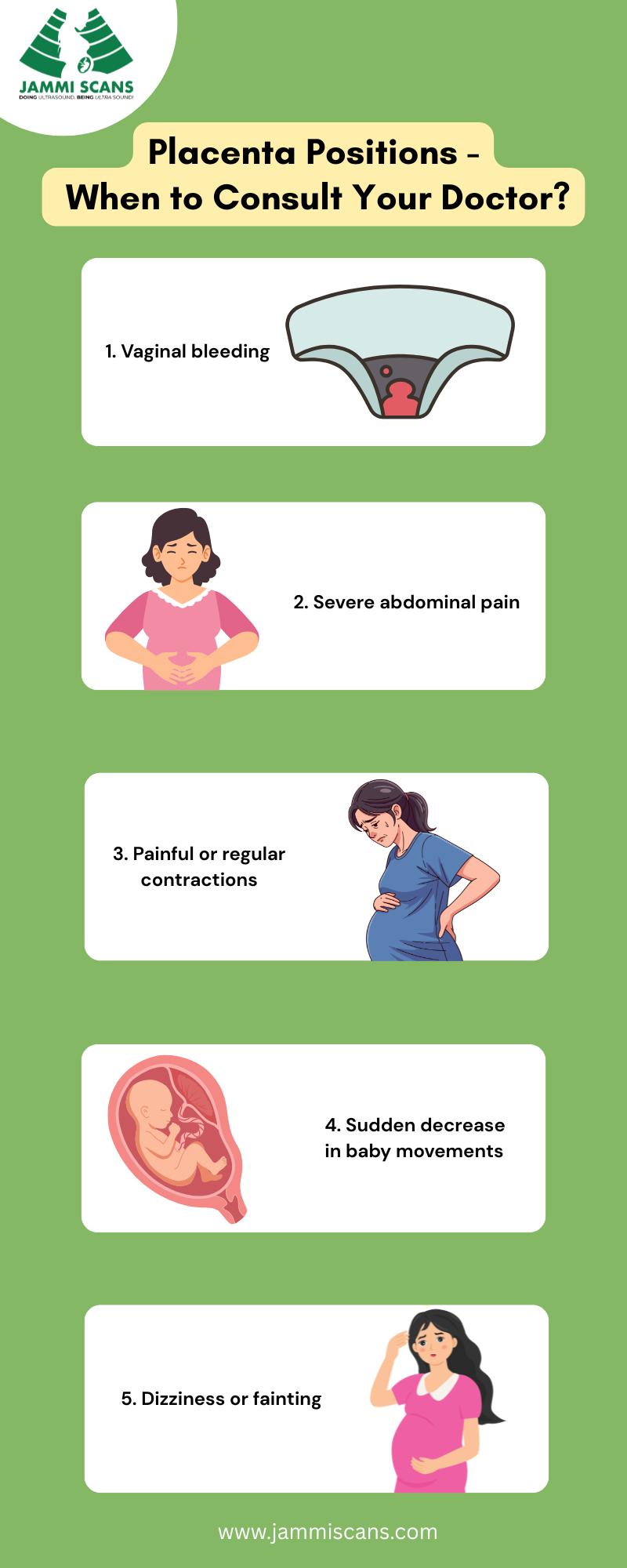
- Vaginal bleeding
- Severe abdominal pain
- Painful or regular contractions
- Sudden decrease in baby movements
- Dizziness or fainting
Apart from this, you may also require close monitoring if there are concerns such as:
- Low-lying placenta
- Placenta previa
- Placental abruption
How is Placenta Position Diagnosed?
During routine prenatal scans, including the anomaly scan, Doppler scan, and growth scans, doctors check the placental position as a routine part of the examination.
The placental position is usually mentioned in the scan report, making it easier for doctors to monitor your pregnancy.
Why Choose Jammi Scans?
Checking the placental position during routine scans is crucial, as it provides important information about how the pregnancy is progressing.
Apart from placental location, scans performed by a fetal medicine specialist help identify even subtle findings that may require attention.
Small observations, such as mild opening of the cervix or changes in placental position, can sometimes help detect potential pregnancy complications early.
Jammi Scans is led by Dr. Deepthi Jammi, an expert fetal medicine specialist with over 15+ years of experience. At Jammi Scans, all scans are carried out with great precision, ensuring highly reliable and accurate results.
For appointments, contact 7338771733.
Conclusion
Anterior placenta vs posterior placenta is a common doubt among pregnant mothers. Both these placental positions are usually normal and generally do not pose any risk to the baby or the pregnancy.
Routine pregnancy scans help monitor the placental position and can identify conditions that may require closer monitoring, including low-lying placenta and placenta previa.
Hence, it is important not to miss routine pregnancy scans and follow-up appointments, as they play a crucial role in monitoring the health of both the mother and the baby throughout pregnancy.
Frequently Asked Questions
1. Is anterior placenta dangerous?
Anterior placenta is one of the common placental positions during pregnancy, and it is usually not dangerous.
2. Is a posterior placenta normal?
Yes, a posterior placenta, or a placenta lying on the back wall of the uterus, is usually normal and does not pose any risk.
3. Does placenta position affect delivery?
If the placental position is anterior, posterior, or fundal, it usually does not affect the mode of delivery. Most women with these placental positions can have a normal vaginal delivery if they do not have any other pregnancy complications.
However, delivery planning may be affected when there are concerns such as:
- Placenta previa
- Placental abruption

- Low-lying placenta
4. Can placenta position change during pregnancy?
Yes, placental position can change during pregnancy as the uterus grows and expands.
For example, around 90% of women with a low-lying placenta in early pregnancy will have the placenta move upward later in pregnancy.