

Table of Contents
ToggleSummary
Medically Reviewed by Dr. Deepthi Jammi (MS – OB/GYN – Fetal Medicine Specialist)
- A low-lying placenta is a common condition seen in about 1 in 20 pregnant women.
- Over 90% of cases resolve on their own as the placenta moves upward with the progression of pregnancy.
- However, it is important to follow your doctor’s advice, which may include avoiding strenuous activity, intercourse, and limiting travel to reduce the risk of complications such as placenta previa.
Book an Appointment with Dr. Deepthi Jammi Today
Introduction
Pregnancy comes with its own set of hurdles and complications for some women, while others have a normal, low-risk pregnancy.
A low-lying placenta is one such pregnancy condition that affects up to 2% of pregnant women.
What is a Low-Lying Placenta in Pregnancy?
A placenta is an organ that develops in the mother’s uterus during pregnancy. It is connected to the baby via the umbilical cord and helps provide nutrition and oxygen to the fetus.
A low-lying placenta is a condition in pregnancy where the placenta is located in the lower part of the uterus, close to the cervix (the opening of the womb), instead of being higher up where it usually sits.
It is typically defined as the placenta being within 20 mm of the cervix, but not covering it.
What is a Low-Lying Placenta in Pregnancy?
A placenta is an organ that develops in the mother’s uterus during pregnancy.
It is connected to the baby via the umbilical cord and helps provide nutrition and oxygen to the fetus.
A low-lying placenta is a condition in pregnancy where the placenta is located in the lower part of the uterus, close to the cervix (the opening of the womb), instead of being higher up where it usually sits.
It is typically defined as the placenta being within 20 mm of the cervix, but not covering it.
Dr. Deepthi Jammi Explains What a Low-Lying Placenta Means
Low-Lying Placenta Vs Placenta Previa
Key Differences You Should Know
| Feature | Low-Lying Placenta | Placenta Previa |
|---|---|---|
| Position | Lower part of uterus or closer to cervix | Covers the cervix entirely or partially |
| When it is seen? | Usually during anomaly scan | Usually during anomaly scan or later in pregnancy |
| Symptoms | Usually no symptoms | Vaginal bleeding |
| Severity | Low in most cases | High |
| Chance of resolving | High | Low |
| Restrictions | No strenuous activity | May require bed rest |
What Causes Low-Lying Placenta in Pregnancy?
Causes of a low-lying placenta include:
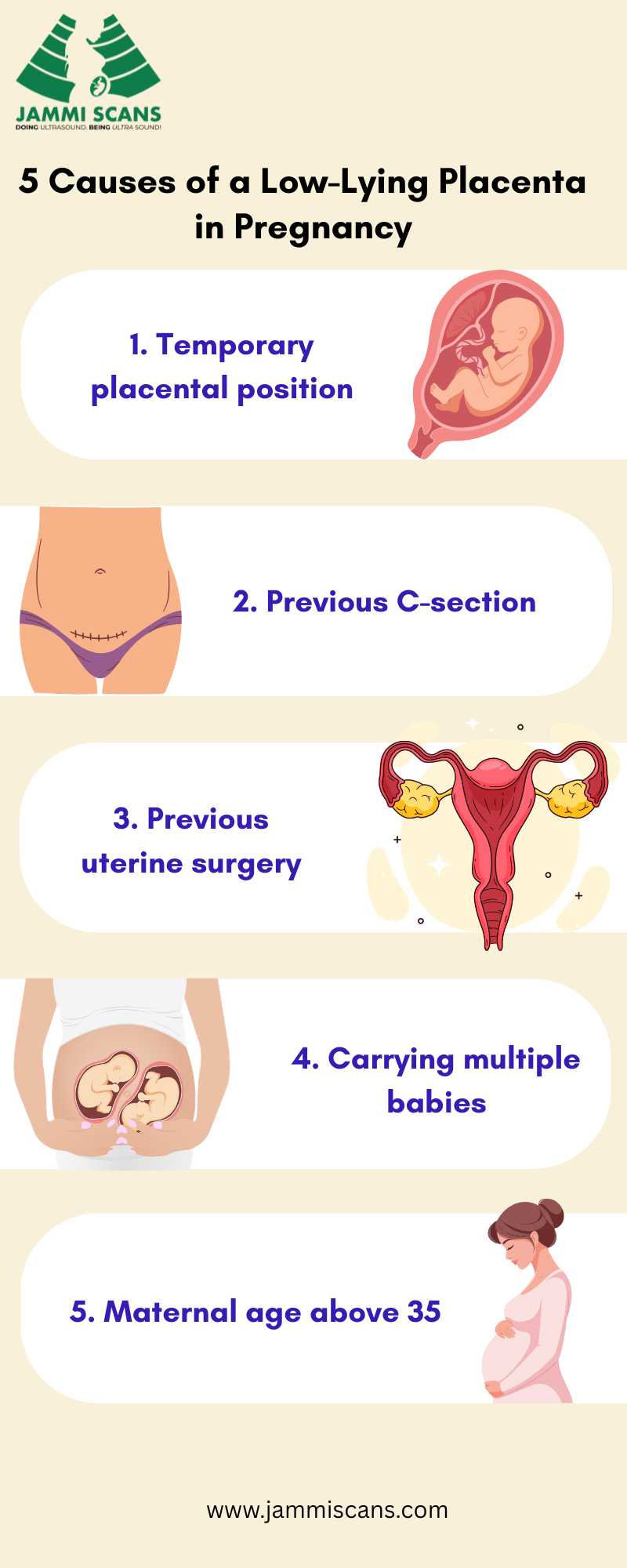
- Temporary placental position
- Previous C-section
- Previous uterine surgery
- Carrying multiple babies
- Maternal age above 35
Will a Low-Lying Placenta Move Up on Its Own?
Yes, in most cases, a low-lying placenta moves up on its own as the pregnancy progresses around the mid-trimester.
Low-Lying Placenta Symptoms: What Should You Watch For?
Usually, a low-lying placenta has no symptoms and is found during a routine anomaly scan.
Low-Lying Placenta Precautions: What Should You Avoid?
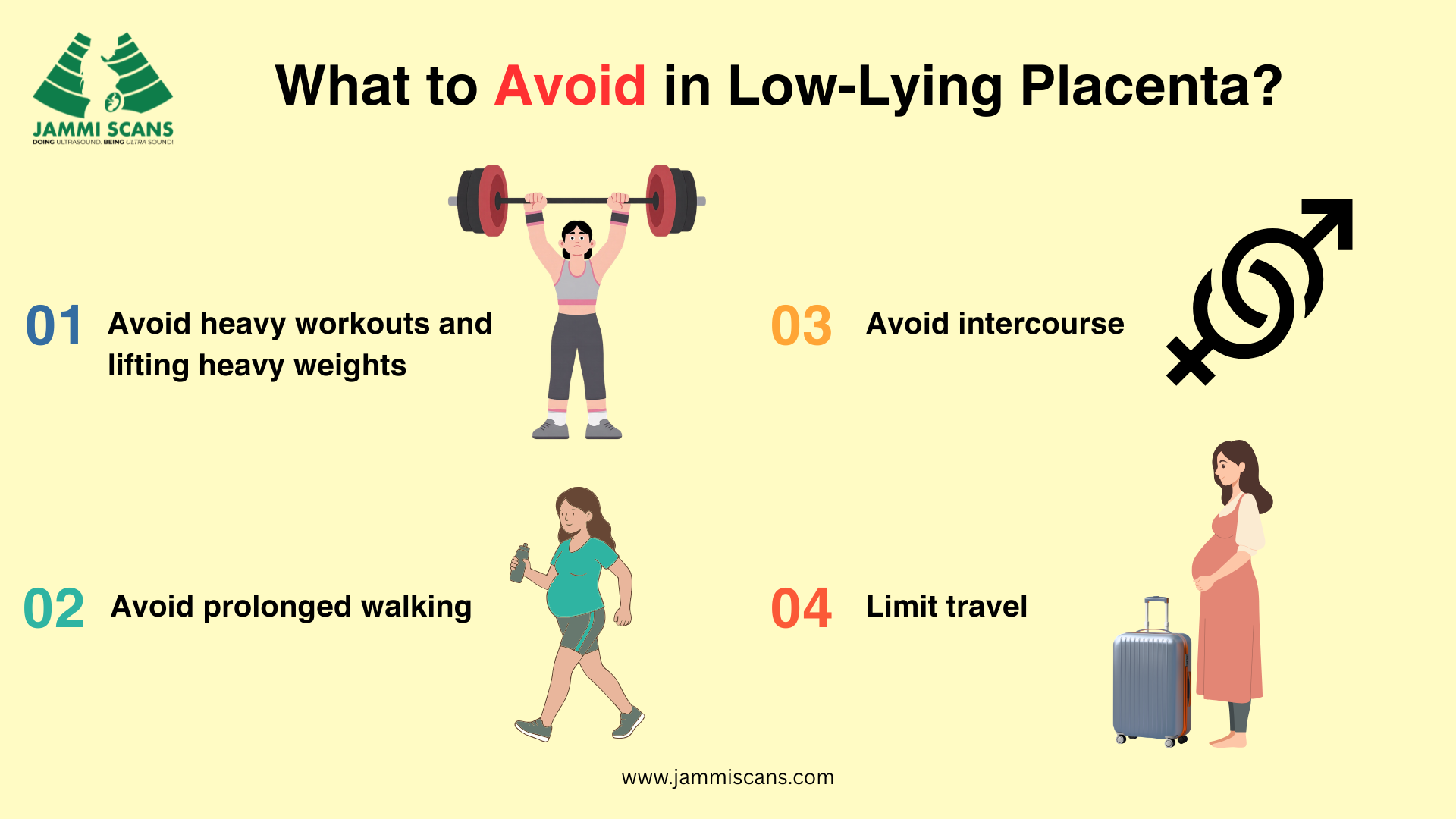
- Avoid strenuous activity like heavy workouts and lifting heavy weights
- Avoid prolonged walking
- Avoid intercourse
- Limit travel
How is Low-Lying Placenta Diagnosed and Monitored?
Ideally, a low-lying placenta is diagnosed during an anomaly scan around 18–22 weeks of pregnancy.
Healthcare experts use routine pregnancy ultrasound scans to monitor the placental position.
When Should You Worry About a Low-Lying Placenta?
You should be concerned about a low-lying placenta if:
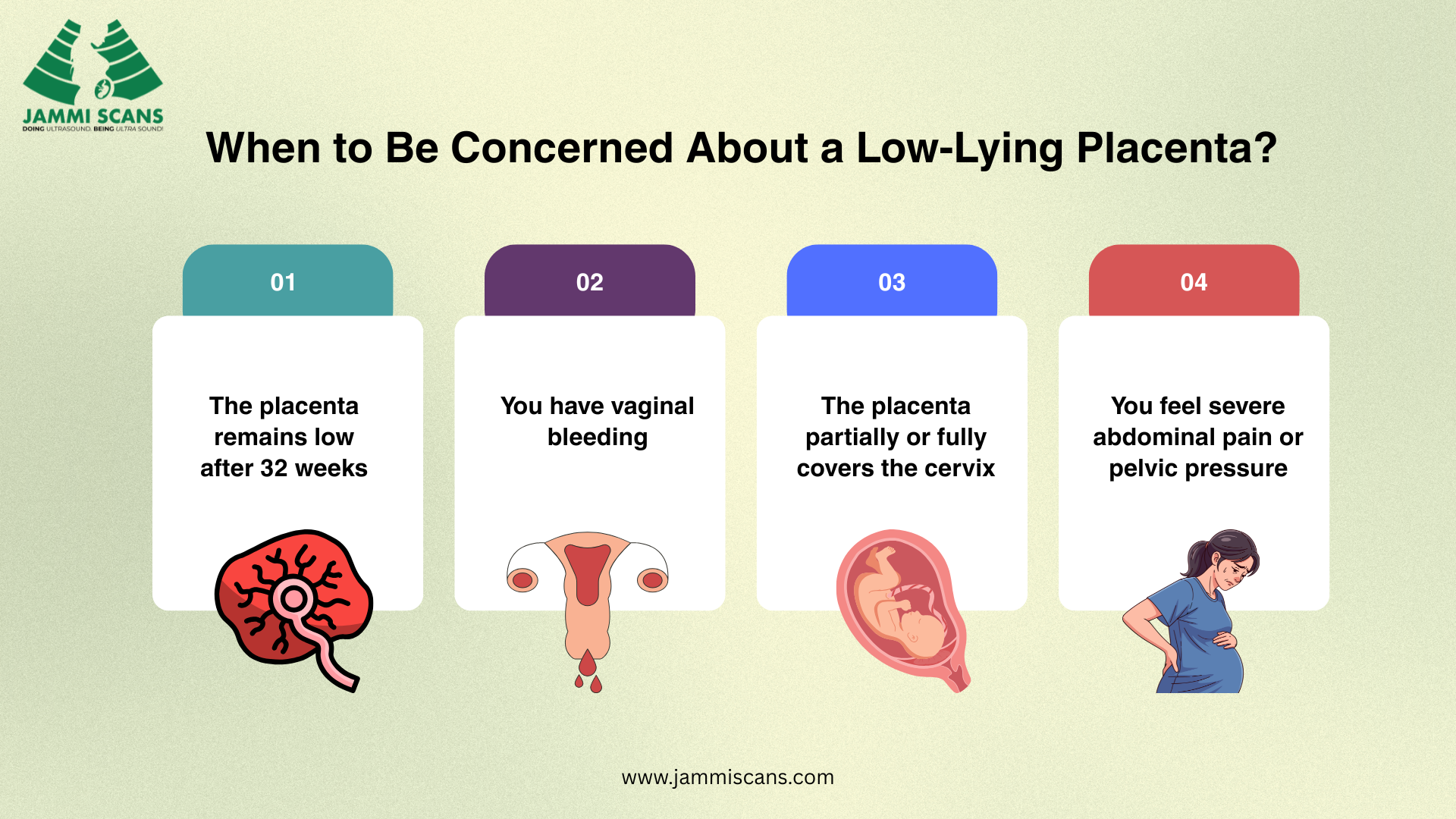
- The placenta hasn’t moved up after 32 weeks of pregnancy
- You experience vaginal bleeding
- The placenta partially or completely covers the cervix
- You experience severe abdominal pain or pelvic pressure
Can Low-Lying Placenta Affect Normal Delivery?
Usually, a low-lying placenta moves up by itself as the pregnancy progresses, so it does not impact the type of delivery in most cases.
Why Choose Jammi Scans for low-lying placenta?
While a low-lying placenta is usually not dangerous, it requires close monitoring to ensure it does not develop into placenta previa, a more serious condition during pregnancy.
Consulting a fetal medicine specialist helps in careful assessment and timely follow-up, ensuring the well-being of both the mother and the baby.
At Jammi Scans, Dr. Deepthi Jammi, an FMF-certified fetal medicine specialist, follows standard protocols and provides a detailed evaluation of placental position during each scan.
She also guides patients through the next steps and provides detailed counselling, helping expectant parents feel reassured and less anxious.
FAQ
1. Is the Placental position important during pregnancy?
Yes, placental position during pregnancy is important to assess the well-being of the fetus. It also helps in identifying conditions like low-lying placenta or placenta previa during routine scans, which may require monitoring and follow-up.
2. Is low-lying placenta dangerous?
Around 1 in 20 expectant mothers have a low-lying placenta in mid-pregnancy. However, over 90% of cases resolve on their own.
However, if it persists, it may develop into a more serious condition called placenta previa.
This is why it is important to follow medical advice, get regular scans, and avoid activities such as heavy lifting, strenuous exercise, and unnecessary travel.
3. Can a low-lying placenta become normal?
Yes, in most cases, a low-lying placenta moves upward and resolves on its own as the pregnancy progresses.
4. Can I travel with a low-lying placenta?
It is generally advised to limit travel if you have a low-lying placenta, as in some cases it may persist and develop into placenta previa, a more serious condition.
Travel only when necessary and avoid unnecessary exertion. Always consult your doctor before planning travel.
5. Is bed rest required for a low-lying placenta?
While adequate rest is important and you should avoid strain, strict bed rest is usually not required. You can continue your daily routine, but avoid:
- Straining
- Lifting heavy weights
- Heavy workouts
- Sexual activity (if advised by your doctor)
- Unnecessary travel
6. Is walking safe with a low-lying placenta?
Yes, walking is generally safe if you have a low-lying placenta. However, avoid brisk walking or intense workouts, and consult your doctor before starting or continuing any physical activity.
7. How serious is a low-lying placenta?
A low-lying placenta is usually not serious if monitored regularly.

Reviewed by Dr. Deepthi Jammi - Fetal Medicine Specialist
Dr. Deepthi Jammi (Director, Jammi Scans) is a qualified OB/GYN and Post-Doc in Maternal Fetal Medicine. As a pregnancy ultrasound expert, she is passionate about healthy pregnancies and works towards spreading awareness on the latest diagnostic options available for parents to choose from. Dr.Deepthi has received gold medals and awards in Fetal Medicine at international and national conferences, and has appeared in numerous prestigious regional magazines and TV interviews.