

Table of Contents
ToggleSummary
Medically Reviewed by Dr. Deepthi Jammi (MS – OB/GYN – Fetal Medicine Specialist)
- An anomaly scan, also called the 20-week scan or TIFFA scan, is a detailed ultrasound performed between 18 and 24 weeks of pregnancy.
- The anomaly scan procedure is non-invasive, painless, and uses safe high-frequency sound waves; there is no radiation involved.
- The doctor systematically examines the baby’s brain, heart, spine, organs, limbs, placenta, and amniotic fluid.
Introduction
The anomaly scan is one of the most important ultrasounds during your pregnancy journey. It is performed between 18 and 22 weeks of gestation.
This detailed ultrasound gives your doctor a comprehensive look at how your baby is growing and if all the major structures are developing normally.
An anomaly scan is also known as the mid-pregnancy scan, anatomy scan, level 2 or TIFFA (Targeted Imaging for Fetal Anomalies) scan. It is highly recommended as a standard part of antenatal care.
Studies show that an anomaly scan can detect more than 200 structural abnormalities in the fetus.
Schedule an Anomaly Scan with Dr. Deepthi Jammi Today
How is Anomaly Scan Done?
The anomaly scan is straightforward and non-invasive. It follows a step-by-step process to make sure every part of your baby is carefully checked.
Here’s what happens during the scan.
1. Preparation – How to Prepare for an Anomaly Scan?
An anomaly scan requires very little preparation:

- No fasting necessary: You can eat and drink as normal before the scan
- Hydrate well: Drinking water before the scan helps improve image clarity and visibility during the ultrasound.
- Wear comfortable clothing that allows easy access to your abdomen.
- Carry your pregnancy file containing records of all your previous antenatal visits and scans, along with your doctor’s referral letter.
Tip: Carry a light snack with you. If your baby is in an unfavourable position, the doctor may ask you to walk around or take a short break, and having a snack can help encourage the baby to move.
2. Ultrasound Procedure
Once you’re comfortable on the examination table, the anomaly scan process begins:
- A safe, water-based gel is applied to your abdomen. This gel helps clear any air bubbles between the transducer and your skin to ensure proper and clear sound wave transmission.
- The doctor places a handheld device called a transducer gently on your abdomen and moves it in different directions.
- High-frequency sound waves emitted by the transducer travel through the gel and bounce off your baby, creating real-time images on a monitor.
- The scan is performed transabdominally (over the abdomen) in most cases. A transvaginal probe is occasionally used if the placenta is low-lying or if image clarity needs to be improved.
3. Detailed Examination
The doctor evaluates the following during an anomaly scan:
Fetal Biometry (Growth Measurements)
- Head circumference (HC)
- Biparietal diameter (BPD) – the width of the baby’s head
- Abdominal circumference (AC)
- Femur length (FL) – the length of the thigh bone
These measurements determine if your baby is growing as expected for its gestational age. Other anatomical tests include:
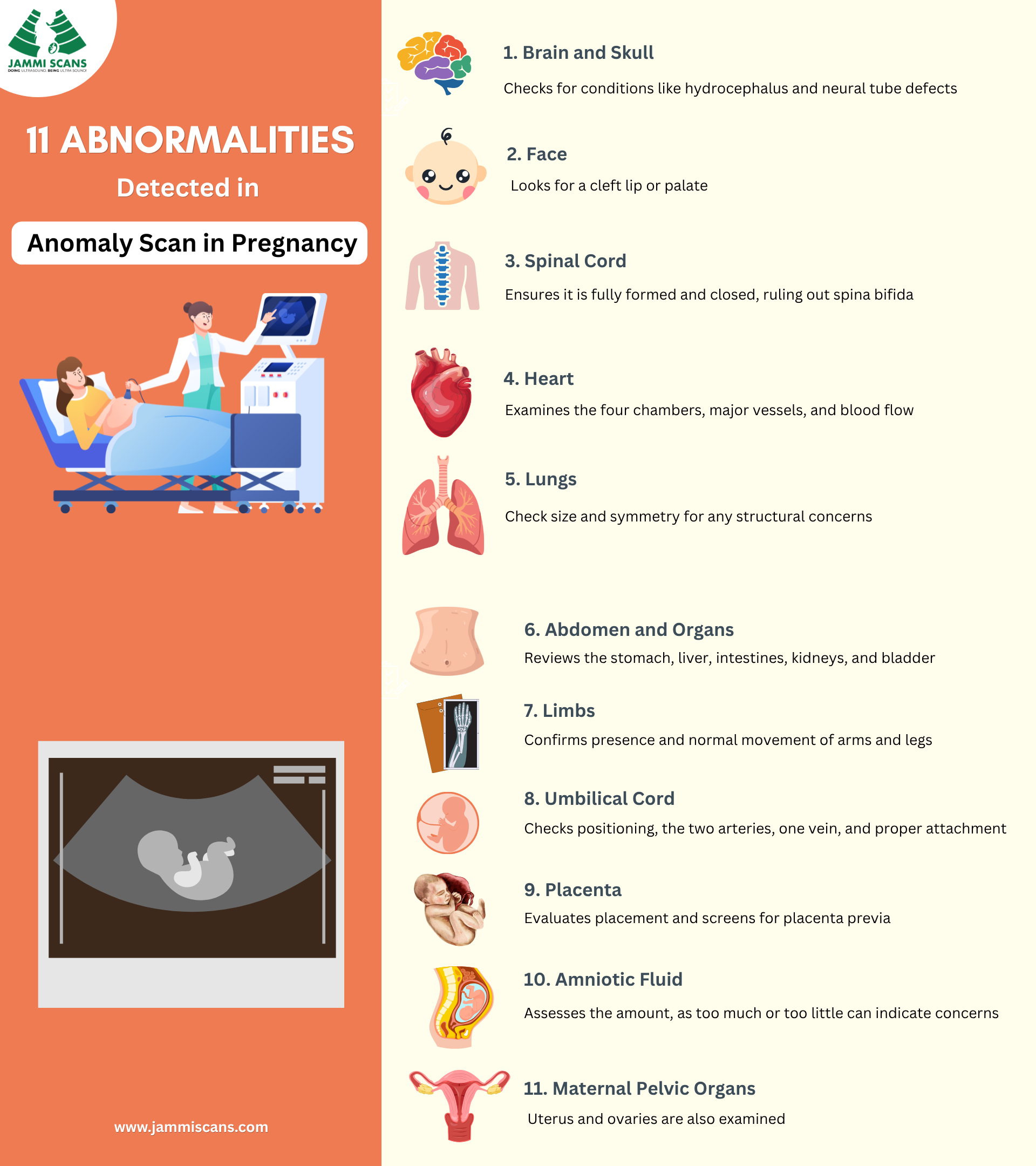
- Brain and Skull – Checks for conditions like hydrocephalus and neural tube defects
- Face – Looks for a cleft lip or palate
- Spine – Ensures it is fully formed and closed, ruling out spina bifida
- Heart – Examines the four chambers, major vessels, and blood flow
- Lungs – Check size and symmetry for any structural concerns
- Abdomen and Organs – Reviews the stomach, liver, intestines, kidneys, and bladder
- Limbs – Confirms presence and normal movement of arms and legs
- Umbilical Cord – Checks positioning, the two arteries, one vein, and proper attachment
- Placenta – Evaluates placement and screens for placenta previa
- Amniotic Fluid – Assesses the amount, as too much or too little can indicate concerns
- Maternal Pelvic Organs – Uterus and ovaries are also examined
4. Report and Explanation
Once the scan is complete, the fetal medicine specialist reviews all their findings and prepares a detailed report.
The report details the following:
- Fetal biometric measurements and estimated weight
- Individual assessment of all the organ systems examined
- Position of the placenta and amniotic fluid levels
- The overall impression: normal or follow-up required
How Long Does the Anomaly Scan Take?
An anomaly scan usually takes 30 to 35 minutes. It may take longer if:
- The baby is in an unfavourable position
- There are multiple fetuses
- A suspicious finding needs further assessment
- High BMI or abdominal scarring affects image clarity
If the scan is incomplete, a repeat scan is within the next 2 days.
Is the Procedure Painful or Uncomfortable?
The anomaly scan is not a painful procedure. Here is what most women commonly experience:
- Gentle pressure when the transducer is moved across the abdomen
- In rare cases, if a transvaginal ultrasound is done, then there may be slight discomfort but no pain.
The procedure is very safe and non-invasive. There are no injections or use of internal instruments in most cases, and no exposure to radiation.
Also, Read More About “Is anomaly Scan Procedure Painful or Not?”
Conclusion
Understanding exactly how an anomaly scan is done, from preparation to the report, helps with setting your expectations and being confident in approaching your appointment.
At Jammi Scans, every anomaly scan is performed personally by Dr Deepthi Jammi, an FMF-certified fetal medicine specialist with over 15 years of experience.
Using advanced technology, including the GE Voluson Expert 22, Dr Deepthi Jammi ensures every detail is captured with precision, and a detailed diagnostic report is ready on the same day.
Detailed post-scan counselling is provided after every appointment, so you leave knowing exactly what your scan means for you and your baby.
Book your appointment: Call 7338771733
FAQ
1. Will I be able to see my baby during the scan?
Yes! The images of your baby are displayed on a monitor in real time throughout the scan. Many parents get their first clear view of their baby’s face, hands, and movements during the anomaly scan.
2. What if the baby is not in a good position during the scan?
If the baby is in an unfavourable position, the doctor may ask you to take a short walk, change your posture, or have a light snack to encourage movement.
If the position does not improve, the doctor may ask you to visit again in a day or two to complete the examination.
3. Can the scan take longer than expected?
Yes. The duration depends on factors such as the baby’s position, the number of babies (in multiple pregnancies), the mother’s BMI, and whether any findings need closer assessment.
A typical scan takes 30 to 45 minutes, but it can take longer in certain situations.
4. Will I get images or videos of the baby?
Yes. You will typically receive printed or digital images from your scan. Ask your scan centre at the time of booking about what is provided.
5. Is it okay to talk or ask questions during the scan?
Absolutely. The doctor and specialist are happy to answer your questions before, during, and after the scan.
At Jammi Scans, Dr Deepthi Jammi provides personal counselling after the scan to walk you through every detail of your report.
6. Can the anomaly scan be done at any time of the day?
Yes, the anomaly scan can be performed at any time of day. The baby’s position and activity level are not significantly affected by the time of day.
Reviewed by Dr. Deepthi Jammi - Fetal Medicine Specialist
Dr. Deepthi Jammi (Director, Jammi Scans) is a qualified OB/GYN and Post-Doc in Maternal Fetal Medicine. As a pregnancy ultrasound expert, she is passionate about healthy pregnancies and works towards spreading awareness on the latest diagnostic options available for parents to choose from. Dr.Deepthi has received gold medals and awards in Fetal Medicine at international and national conferences, and has appeared in numerous prestigious regional magazines and TV interviews.