
Table of Contents
ToggleSummary
Medically Reviewed by Dr. Deepthi Jammi (MS- OB/GYN – Fetal Medicine Specialist)
- The most fertile phase of the menstrual cycle is ovulation, and knowing the day of ovulation increases the chances of conception.
- Follicular study is a simple and accurate ultrasound technique to monitor ovulation.
Introduction
Ovulation is an important phase of a woman’s menstrual cycle. If you are planning to conceive, you must know the day of ovulation.
Ovulation is easier to track in regular cycles, but it becomes difficult when periods are irregular and symptoms are unclear.
What is Ovulation?
Ovulation is the process in which a mature egg is released from the ovary into the fallopian tube, where it can be fertilized by sperm.
It usually occurs once in each menstrual cycle, about 12–14 days before the next period. Ovulation is the most fertile phase of the cycle and is essential for natural conception.
Plan Your Pregnancy with Dr. Deepthi Jammi Today
What Happens During Ovulation?
Ovulation is the release of a mature egg from the ovary, controlled by hormones from the brain and ovaries.
- As the first step, the brain releases Gonadotropin-Releasing Hormone (GnRH). This, in turn, stimulates the pituitary gland to produce Follicle-Stimulating Hormone (FSH) and Luteinizing Hormone (LH).
- The Follicle-Stimulating Hormone (FSH) helps several follicles grow in the ovary. Now, one follicle becomes dominant and starts producing Estrogen (Estradiol).
- As the dominant follicle grows, estrogen levels increase. High estrogen triggers a sudden rise in LH called the LH surge.
- The LH surge causes the dominant follicle to rupture, releasing the mature egg. This is ovulation. The egg enters the fallopian tube and remains alive for about 24 hours.
- The ruptured follicle becomes the Corpus Luteum, which produces Progesterone. Progesterone prepares the uterine lining for implantation and slightly increases basal body temperature.
- If pregnancy does not occur, Progesterone and estrogen levels fall, the uterine lining sheds, and menstruation begins.
How Do I Know When I Am Ovulating?
Some women experience the symptoms of ovulation. Some women do not. Both are normal. The common symptoms of ovulation are:
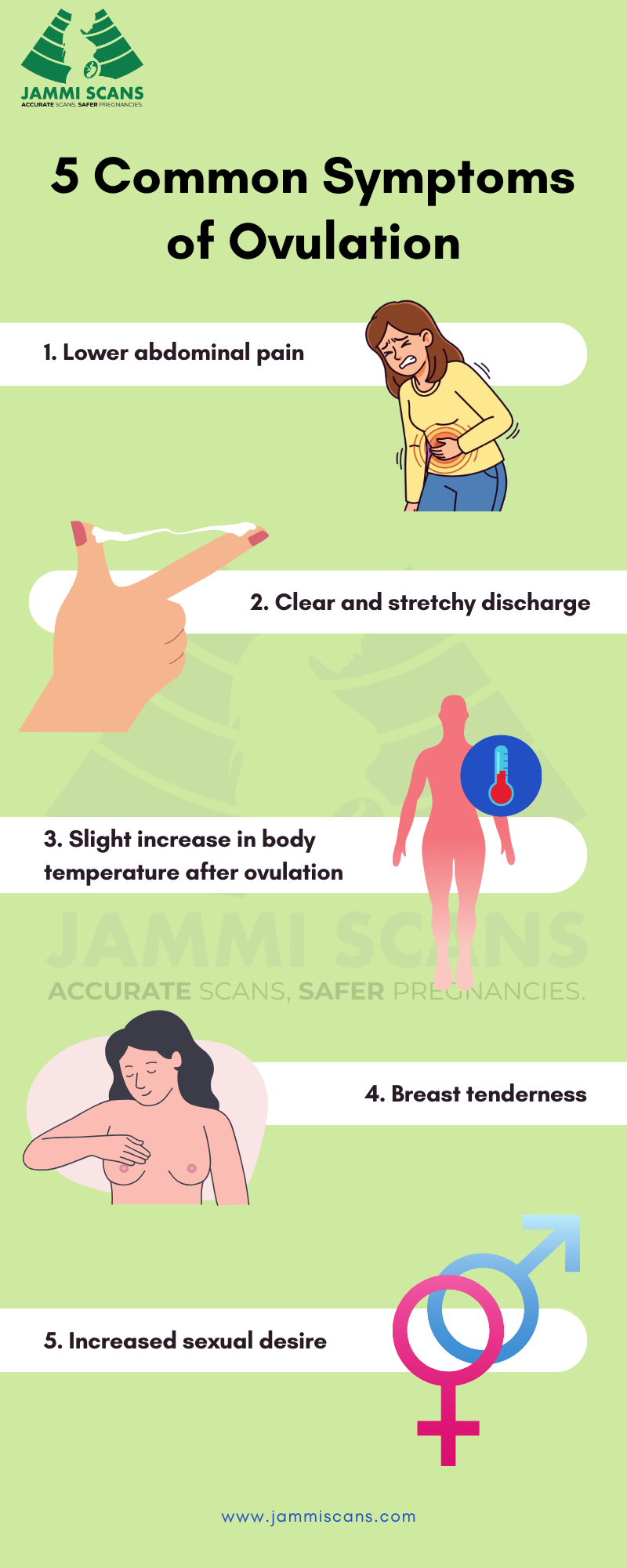
- Lower abdominal pain
- Clear and stretchy discharge
- Slight increase in body temperature after ovulation
- Breast tenderness
- Increased sexual desire
How Many Days After My Period Do I Ovulate?
In a normal 28-day cycle, ovulation occurs around Day 14. Day 1 is the first day of your menstruation.
Generally, ovulation takes place 12 to 16 days before the next menstruation. Women with longer cycles ovulate later. Women with shorter cycles ovulate earlier.
How Can I Track Ovulation?
Ovulation can be monitored through:
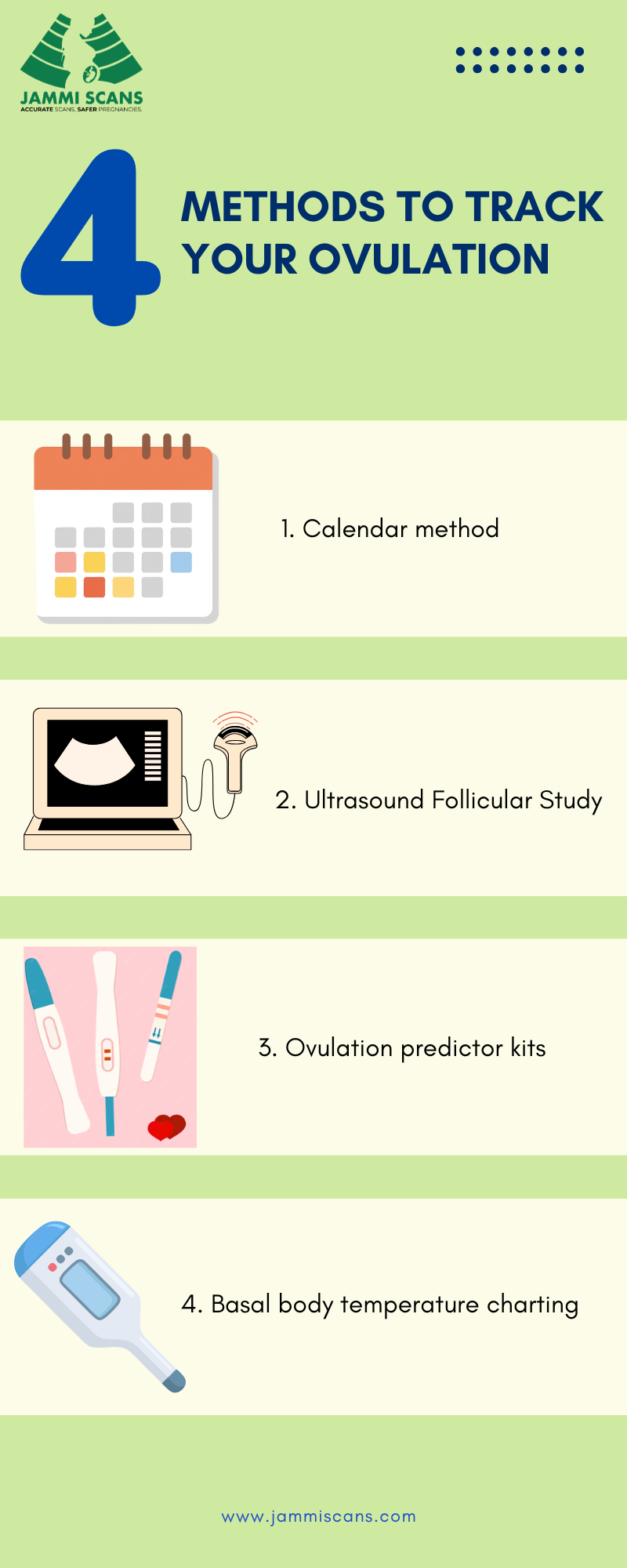
- Calendar method
- Ultrasound follicular study
- Ovulation predictor kits
- Basal body temperature charting
The most accurate method of ovulation detection is the follicular study.
Follicular study is a simple and painless transvaginal ultrasound scan performed between day 8 and day 20 of the menstrual cycle.
This series of scans helps monitor the dominant follicle and detect the time of egg rupture, also called ovulation, and can accurately predict ovulation.
What Causes Delayed or Missed Ovulation?
Causes of delayed or missed ovulation include:
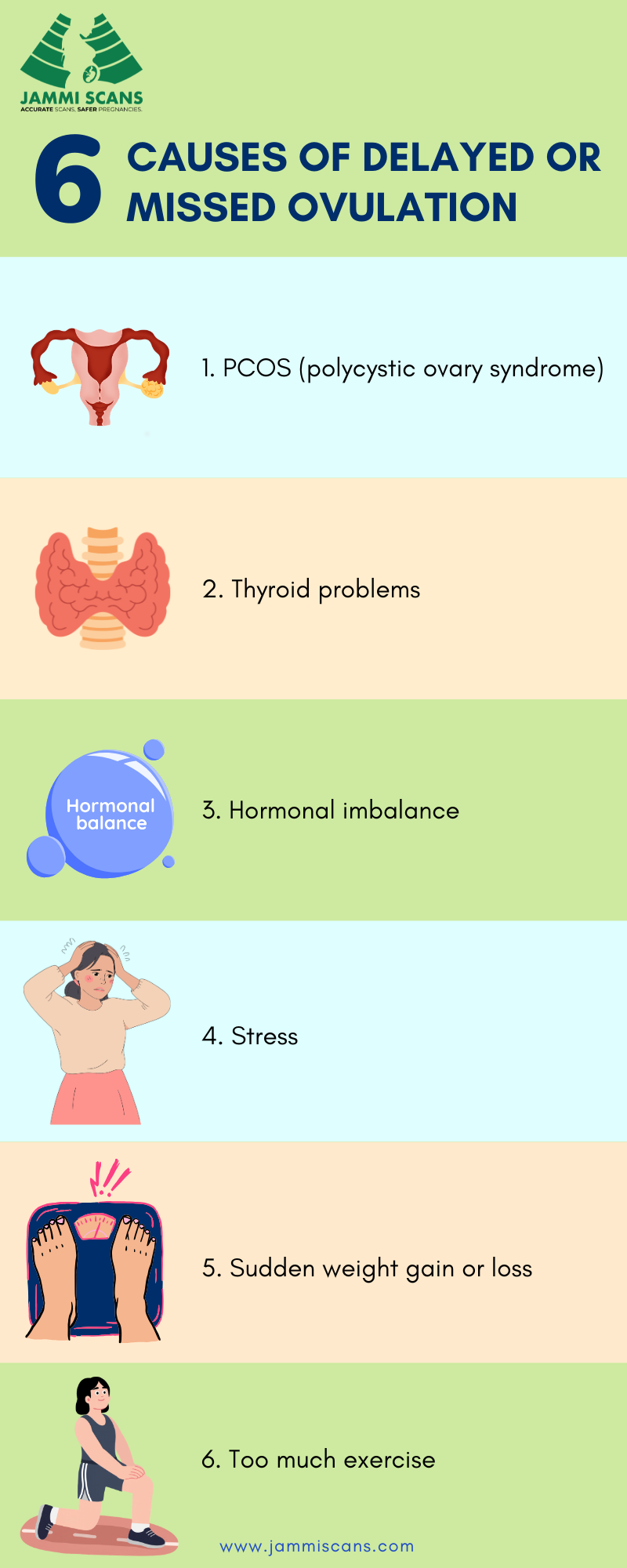
- PCOS (polycystic ovary syndrome)
- Thyroid problems
- Hormonal imbalance
- Stress
- Sudden weight gain or loss
- Too much exercise
When ovulation does not occur, it is called anovulation. This is one of the reasons for infertility in women. The good news is that it can be treated once diagnosed.
Conclusion
Ovulation is the most fertile period in a woman’s cycle. Knowing your ovulation date and timing intercourse accordingly can help increase your chances of natural conception.
If you have irregular periods and are trying to conceive naturally, a follicular study is usually the recommended scan.
At Jammi Scans, Dr. Deepthi Jammi performs all follicular study scans and guides patients on the next steps.
For appointments, contact 7338771733 to book your scan now.
FAQ
1. How many days during ovulation can you get pregnant?
You can get pregnant during the fertile window, which is five days before ovulation, the day of ovulation, and the next day.
2. Can I get pregnant outside of ovulation?
Pregnancy only occurs when an egg is available. However, since sperm can live up to 5 days, you can still get pregnant.
3. Can you ovulate without having a period?
Yes. Ovulation can occur before the first menstrual period after a long time, especially after giving birth or stopping birth control methods.
4. How many days do you ovulate for?
Ideally, women ovulate once in every menstrual cycle, and the egg can stay viable for up to 24 hours. Hence, it is crucial to track ovulation and time intercourse appropriately if you are planning to conceive.