Table of Contents
Toggle- Introduction
- What Is the Cervix?
- What Is a Cervical Length Scan?
- Why Is a Cervical Length Scan Done?
- When Is Cervical Length Measured?
- How Is the Cervical Length Scan Performed?
- Why Is Transvaginal Ultrasound Preferred?
- What Is a Normal Cervical Length?
- What Is a Short Cervix?
- 6 Causes of a Short Cervix
- 7 Symptoms of a Short Cervix
- What Happens If the Cervical Length Is Short?
- Is a Cervical Length Scan Safe?
- 4 Limitations of Cervical Length Scan
- Conclusion
- Frequently Asked Questions
Introduction
Routine pregnancy scans play a crucial role in monitoring the growth and development of the baby and the well-being of both the mother and the baby.
One of the crucial metrics measured during the scans is the cervical length. But what is a cervix? What is cervical length? This blog answers everything you need to know about the cervix, cervical length, and its importance.
What Is the Cervix?
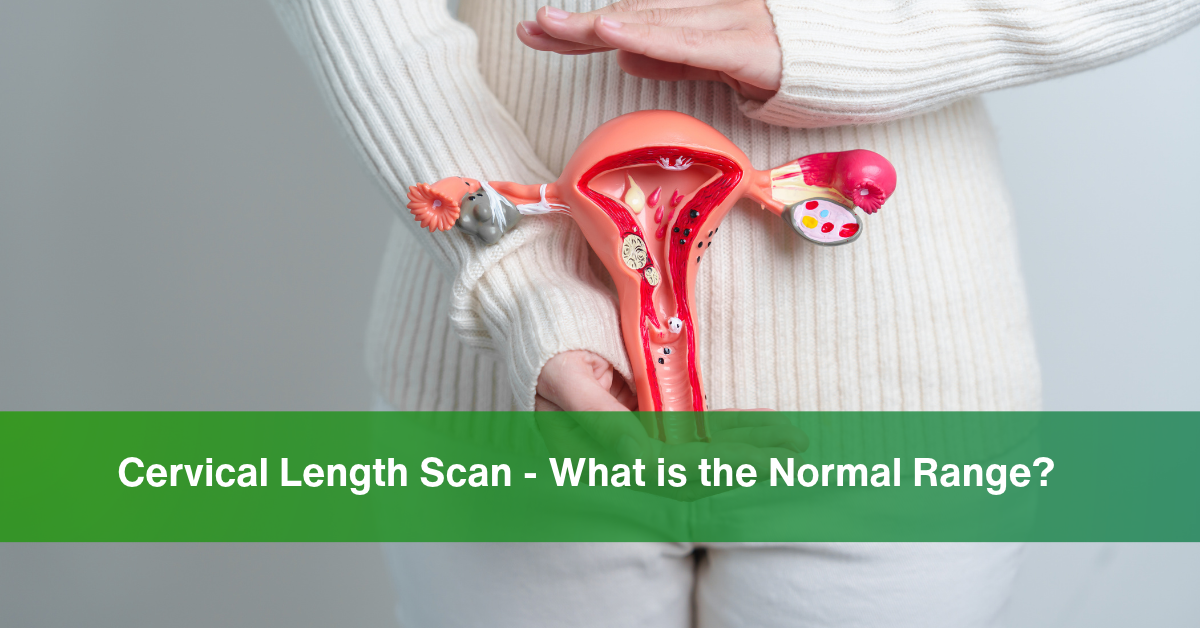
The cervix is the mouth or opening of the uterus. It is a narrow cylindrical part present at the lower end of the womb, connecting the vagina and the uterus.
The cervix is an important organ that is vital during menstruation, intercourse, and childbirth.
What Is a Cervical Length Scan?
As the name suggests, a cervical length scan means measuring the length of the cervix. This is crucial as it can help estimate the risk of preterm birth.
Usually, the length of the cervix is measured during an anomaly scan to check if the mother has higher chances of preterm birth.
Schedule an Appointment with Dr. Deepthi Jammi Today
Why Is a Cervical Length Scan Done?
A cervical length scan is done to check if the mother has a high risk of preterm birth. It helps assess whether the cervix is shortening prematurely, which may increase the risk of preterm labour.
When Is Cervical Length Measured?
Ideally, cervical length is measured along with an anomaly scan or growth scan to assess the length of the cervix and check if the mother is at a higher risk of preterm birth.
However, if the pregnant mother has a history of preterm birth, a cervical length scan may be carried out earlier, around 16 weeks of pregnancy, to measure the cervix and make timely interventions if needed.
How Is the Cervical Length Scan Performed?
A cervical length scan is ideally performed using the transvaginal route with an internal ultrasound probe.
The patient is asked to lie down comfortably on the examination table with the legs slightly apart.
A small transvaginal probe, covered with a protective probe cover, is prepared with a layer of lubricant gel.
The probe is then gently inserted into the mother’s vagina.
The doctor measures the length of the cervix and documents the findings in the report.
Why Is Transvaginal Ultrasound Preferred?
While the cervix can be measured through an abdominal ultrasound as well, doctors usually prefer the transvaginal route because it provides a clearer view of the cervix. Since the probe is placed closer to the cervix, it can provide more accurate measurements compared to the transabdominal route.
What Is a Normal Cervical Length?
The normal cervical length at the 20 weeks scan is around 30–40 mm. A cervical length of 25 mm or 2.5 cm around 20–24 weeks of pregnancy is considered short, and it increases the risk of preterm birth.
What Is a Short Cervix?
A short cervix is when the length of the cervix is shorter than it is supposed to be within a particular timeframe of pregnancy.
For example, if the cervix measures less than 25 mm or 2.5 cm in a 20-week anomaly scan, it means the mother has a short cervix.
6 Causes of a Short Cervix
Usual causes of a short cervix include:
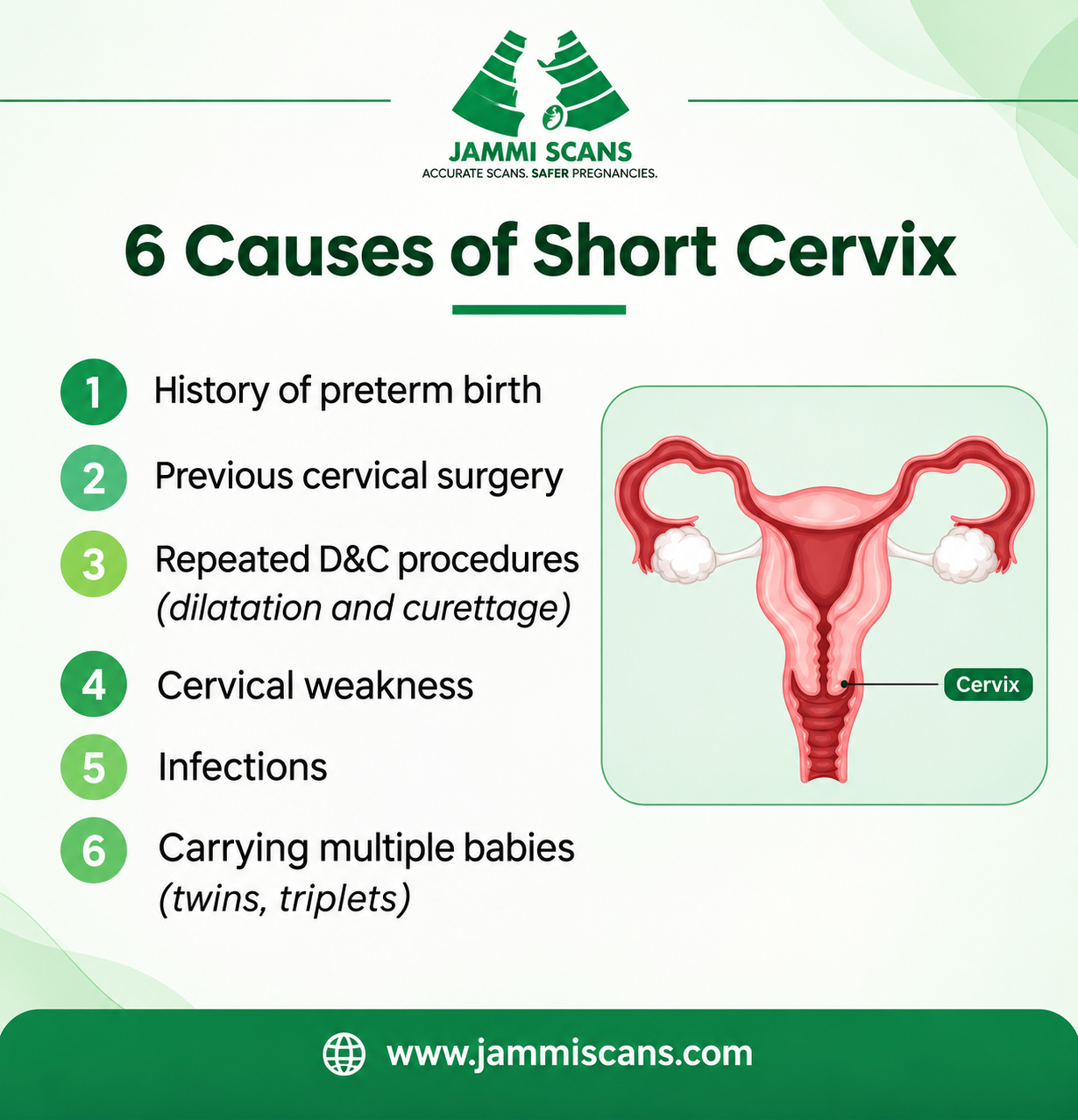
- History of preterm birth
- Previous cervical surgery
- Repeated D&C procedures (dilatation and curettage)
- Cervical weakness
- Infections
- Carrying multiple babies (twins, triplets)
7 Symptoms of a Short Cervix
While a short cervix doesn’t always show symptoms, there are a few common symptoms you can watch out for that could indicate higher chances of a short cervix, including:
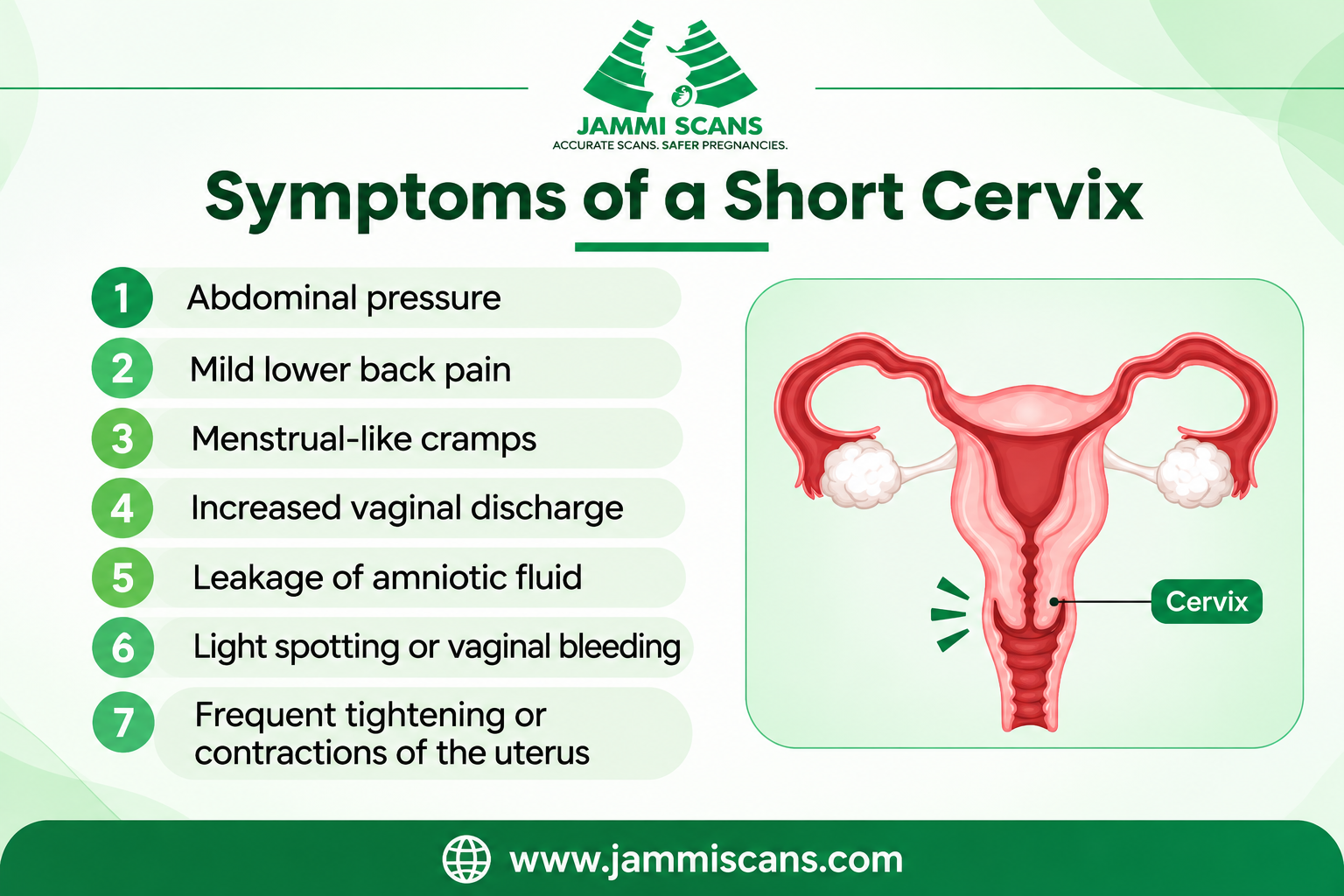
- Abdominal pressure
- Mild lower back pain
- Menstrual-like cramps
- Increased vaginal discharge
- Leakage of amniotic fluid
- Light spotting or vaginal bleeding
- Frequent tightening or contractions of the uterus
Note: While some of these symptoms can be normal in pregnancy, it is important to get them checked with your doctor to ensure the well-being of both the mother and the baby.
What Happens If the Cervical Length Is Short?
If the cervix is shorter than expected during routine scans, it increases the risk of preterm birth. This is because it can lead to premature opening or dilation of the cervix, leading to preterm childbirth.
In some cases, doctors may also notice cervical funneling, where the inner part of the cervix begins to open while the outer part remains closed. Ideally, both the inner and outer part of the cervix must remain closed during pregnancy.
Hence, if the doctor identifies a short cervix, they might suggest:
- More frequent monitoring
- Pessary (a donut-shaped device that prevents further shortening of the cervix)
- Cervical cerclage (stitching the ends of the cervix to prevent premature opening)
- Progesterone therapy (progesterone therapy may help reduce the risk of preterm birth)
- Avoiding excessive physical strain based on medical advice.
Is a Cervical Length Scan Safe?
Yes, a cervical length scan uses ultrasound waves and is non-invasive (doesn’t use any needles). Hence, it is safe for both the mother and the baby.
4 Limitations of Cervical Length Scan
While a cervical length scan is useful in measuring the length of the cervix, it also has certain limitations:
- The scan only measures the length of the cervix and estimates the risk of preterm birth. It cannot 100% rule out the possibility of preterm birth.
- For some mothers, the cervix may be short, but they might not have preterm labour.
- For some women, preterm labour may happen even without prior signals of a short cervix.
- Cervical length can change during the course of pregnancy; hence, one cervical length scan isn’t enough, and close monitoring is required for those with a short cervix.
Conclusion
While routine prenatal scans are crucial to ensure the growth and development of the baby, they also help identify potential risks such as preterm labour early, thus helping doctors and expectant parents plan appropriate care and treatment.
It is also important to consult a fetal medicine specialist for prenatal scans, as they note even the smallest cues, thus helping with timely action.
At Jammi Scans, Dr. Deepthi Jammi, an FMF Certified fetal medicine specialist performs the scans and guides pregnant mothers through the next steps.
Jammi Scans is a NABCB-certified and ISO 9001:2015 certified scan center specializing in pregnancy and gynecological scans.
For appointments, contact 7338771733.
Frequently Asked Questions
1. Is a cervical length scan painful?
A cervical length scan is typically carried out via the transvaginal route. Hence, some women might experience mild discomfort for a few minutes. But it isn’t usually painful when performed by professionals.
2. Is transvaginal ultrasound safe during pregnancy?
Transvaginal scans use sound waves and not radiation, and the probe used is usually small and inserted gently. It is usually safe when performed by expert fetal medicine specialists.
3. Does a short cervix always cause premature delivery?
While a short cervix increases the likelihood of premature delivery, it does not guarantee preterm labour. With close monitoring and timely interventions, many mothers with a short cervix give birth to healthy babies at full term.
4. Can cervical length increase again?
In most cases, no. Cervical length does not significantly increase.
5. Is cervical length checked during the anomaly scan?
Yes, during an anomaly scan at 18–22 weeks of pregnancy, doctors assess the mother’s cervical length as a part of the routine examination to rule out the risk of preterm labour.
6. How often should cervical length be monitored?
Ideally, doctors check the cervical length at every scan after 20 weeks of pregnancy.
But if the mother has an increased risk of a short cervix or preterm birth, they require more frequent monitoring, and the duration changes from case to case.