
Table of Contents
ToggleSummary
- Preconception screening helps identify nutritional deficiencies, health problems, or genetic risks before pregnancy.
- Early screening helps couples prepare their bodies for a healthy pregnancy.
Introduction
Preconception screening is an important step for couples who are planning a pregnancy.
It is a health check done before pregnancy to evaluate overall health. It helps to identify medical conditions that may affect fertility or pregnancy.
Early screening allows doctors to diagnose possible risks, correct nutritional deficiencies, and guide couples. This can help improve the chances of a safe and healthy pregnancy.
What is Preconception Screening?
Preconception screening, as the name suggests, is a set of tests recommended for couples planning a pregnancy.
It helps rule out potential health issues or complications in either partner, including diabetes, thyroid disorders, genetic conditions, and anemia.
This allows these conditions to be treated before pregnancy, helping ensure a healthier and safer pregnancy.
Schedule an Appointment with Dr. Deepthi Jammi Today
Why is Preconception Screening Important Before Pregnancy?
- Underlying medical conditions can be identified during preconception screening. Conditions like diabetes, anemia, thyroid disorders, or hypertension can be diagnosed.
- If any health issue is identified, it can be treated before conception. Thus, further complications are avoided.
- Low levels of nutrients like iron or folic acid might affect a baby’s development. Early treatment of these deficits promotes a healthy pregnancy.
- Some over-the-counter medicines and herbal remedies can be harmful while trying to conceive. So, the doctor checks and suggests safe alternative medicines that can be consumed.
When Should You Do Preconception Screening Before Trying to Conceive?
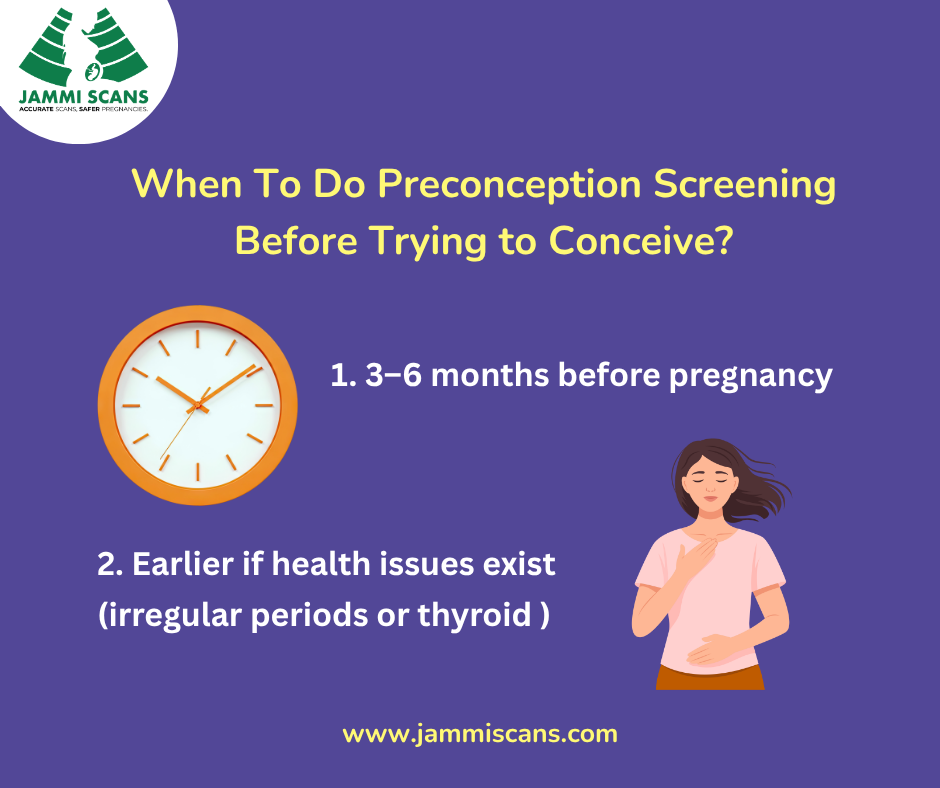
1. Timeframe
Doctors recommend doing preconception screening 3 to 6 months before planning a pregnancy. This gives you enough time to change your lifestyle or get treatment.
2. Earlier for women with medical issues
Women with irregular periods, diabetes, thyroid issues, or a history of pregnancy problems may need to be screened early.
What is Included in a Preconception Checkup?
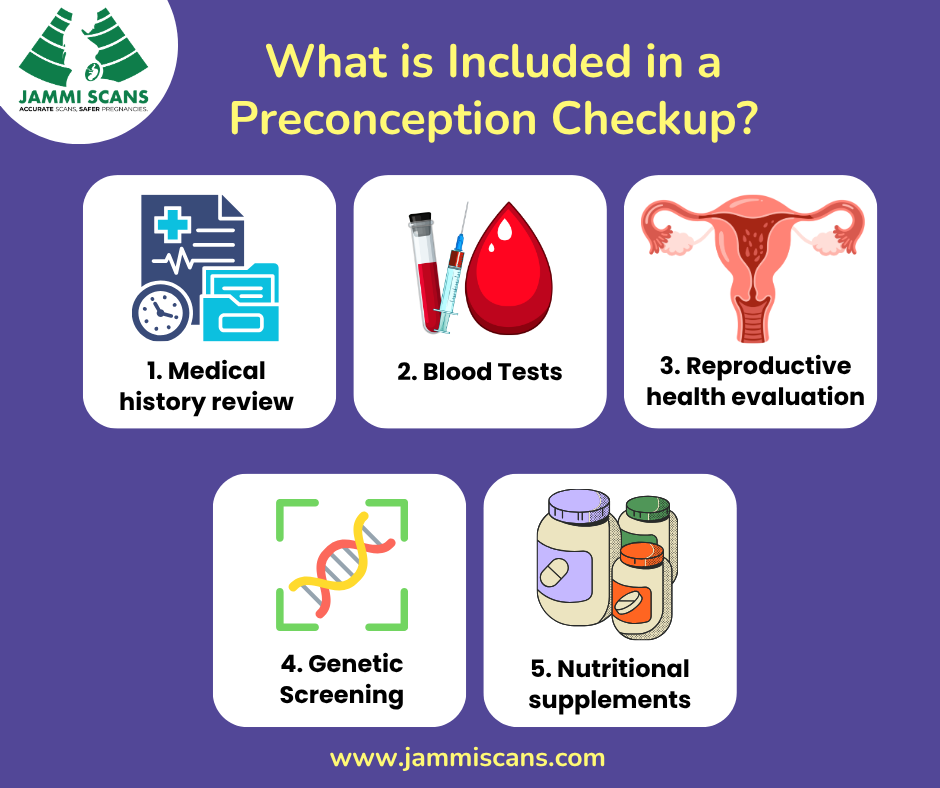
1. Medical history review
The doctor asks about your medical history, past pregnancies, menstrual cycle, and details about the medications that you are taking currently.
2. Blood Tests
Hepatitis B and C screening, HIV and syphilis screening, thyroid function testing, blood sugar testing, and complete blood counts may be suggested.
3. Reproductive health evaluation
In some cases, a scan may be suggested to check the uterus and ovaries for fibroids, cysts, or other structural concerns.
4. Genetic screening
Based on the family history, genetic screening may be advised for both partners. It helps to diagnose inherited conditions such as thalassemia or cystic fibrosis.
5. Nutritional supplements
Depending on the blood test results, your healthcare provider may recommend the required supplements if you have any deficiencies.
Also, the doctor might put you on routine preconception supplements including iron supplements, omega-3s, vitamin D, B6, B12 and Folic acid.
Conclusion
Opting for preconception screening might feel like an extra step, but it helps rule out complications beforehand, enabling couples to have a healthier and safer pregnancy.
It is crucial to meet your healthcare provider and get your preconception screening done.
At Jammi Scans, Dr. Deepthi Jammi provides preconception screening and counselling, helping couples understand their health in depth and guiding them on the next steps. For appointments, contact 7338771733 now.
FAQ
1. Do both partners need preconception screening?
Yes, preconception screening is recommended for both men and women, as it helps detect potential complications. It is important to rule out issues in either partner.
2. What if preconception screening shows risks?
If preconception screening shows risks, your doctor will recommend further tests, treatment, or lifestyle changes before you try to conceive. Managing these risks early helps improve the chances of a healthy pregnancy and baby.

Reviewed by Dr. Deepthi Jammi - Fetal Medicine Specialist
Dr. Deepthi Jammi (Director, Jammi Scans) is a qualified OB/GYN and Post-Doc in Maternal Fetal Medicine. As a pregnancy ultrasound expert, she is passionate about healthy pregnancies and works towards spreading awareness on the latest diagnostic options available for parents to choose from. Dr.Deepthi has received gold medals and awards in Fetal Medicine at international and national conferences, and has appeared in numerous prestigious regional magazines and TV interviews.