
Table of Contents
ToggleStruggling With Pregnancy Nausea? Try These Proven Remedies
Summary
- Nausea during pregnancy is common and caused by hormonal changes in the body.
- Symptoms typically start in early pregnancy and ease by 12-14 weeks for most expectant mothers.
- Simple remedies like small, frequent meals, ginger, vitamin B6, staying hydrated, and avoiding triggers can help manage nausea.
- Seek medical advice if nausea is severe, persistent, or accompanied by dehydration or weight loss.
Introduction
Pregnancy is a time filled with excitement and change, but many women experience nausea during this time.
Often called “morning sickness”, it can range from mild queasiness to more intense discomfort that affects daily life.
In this blog, we’ll explore what pregnancy nausea is, why it happens, how to ease it naturally, how to cope at work, and when it might be something more serious.
What is Nausea During Pregnancy?
Nausea during pregnancy refers to feelings of queasiness and vomiting that many pregnant women experience, especially in the first trimester.
Although it’s commonly called “morning sickness,” it can happen any time of the day or night. This condition affects many of pregnant women and is considered a normal part of early pregnancy for most.
When Does Nausea Usually Start and End?
Pregnancy nausea usually begins around 5–6 weeks of pregnancy and often peaks around 9 weeks. For most expectant mothers, symptoms ease by 12-14 weeks of pregnancy, though some may feel nauseous for a longer period.
Feeling nauseous all day? Consult Dr. Deepthi Jammi
What Causes Nausea During Pregnancy?
Nausea during pregnancy is a common experience caused due to hormonal changes that occur in the body.
In early pregnancy, hormones such as human chorionic gonadotropin (hCG) and estrogen increase to support healthy development. These changes can influence the digestive system, resulting in nausea.
5 Remedies for Nausea During Pregnancy
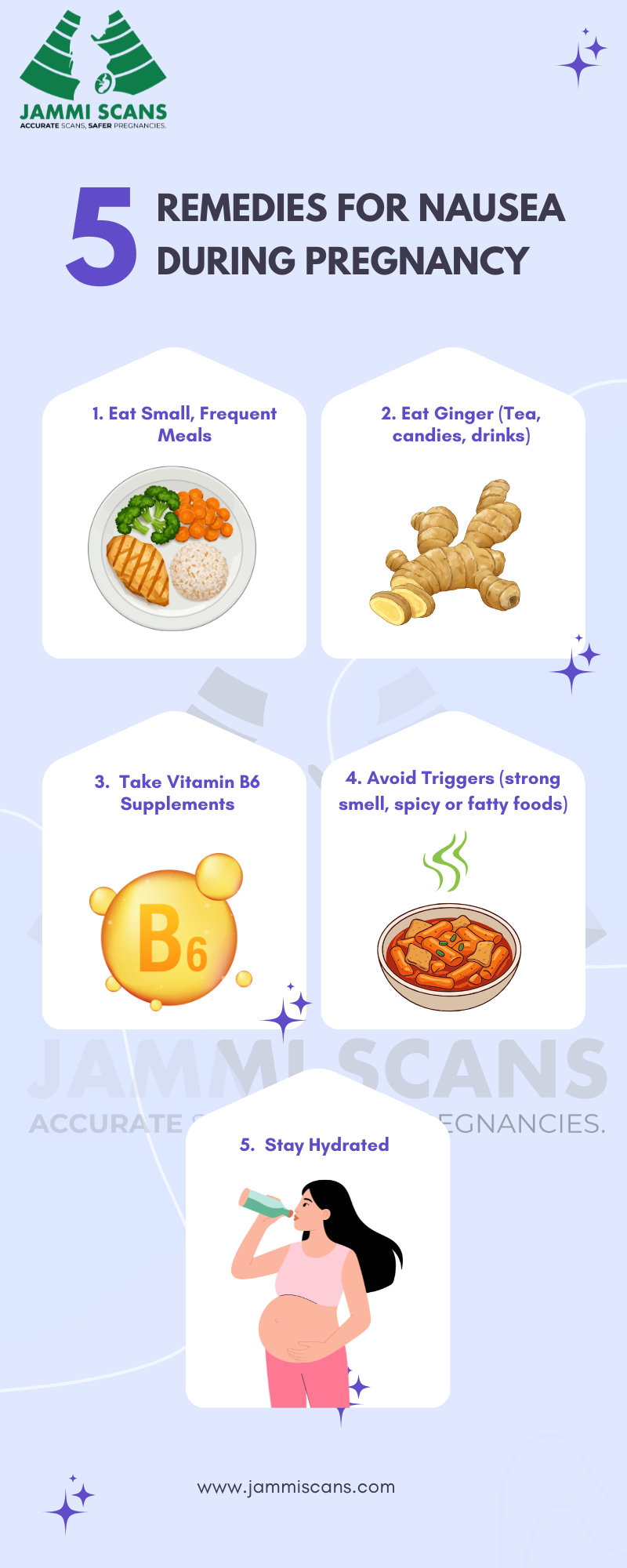
1. Eat Small and Frequent Meals
Having small meals throughout the day instead of large ones helps keep the stomach from being empty (which can worsen nausea) or too full (which can trigger discomfort). Many find plain snacks like crackers or toast especially helpful.
2. Ginger
Studies show that ginger can help ease pregnancy nausea. According to ACOG, 60–70% of women experience relief when using ginger tea, candies, or ginger-based drinks.
3. Vitamin B6
Vitamin B6 (pyridoxine) has been shown to reduce nausea for many pregnant women. Low-dose B6 supplements may be safe but should be taken under medical guidance.
4. Avoid Triggers
Strong smells, spicy or fatty foods can trigger nausea. Identifying and avoiding these triggers can significantly lower symptoms.
5. Stay Hydrated
Sip fluids throughout the day. If plain water is hard to tolerate, try ginger tea or naturally flavored drinks, but avoid caffeine.
How to Deal with Pregnancy Nausea at Work?
Pregnancy nausea can make a regular workday challenging. Here are some tips:
- Keep snacks nearby: Plain crackers, bananas can suppress nausea.
- Hydrate regularly: Drink water or ginger-based drinks, such as ginger tea or ginger-infused beverages, throughout the day.
- Take short breaks: Brief walks or fresh air can help reset your system.
When Should I See a Doctor for Nausea?
While mild and moderate nausea is common, you should see a doctor if you experience:
- Severe nausea and vomiting that prevents food or fluid intake
- Weight loss, dizziness, light-headedness
- Signs of dehydration (less urination, dry mouth)
These symptoms may indicate Hyperemesis Gravidarum (HG) — a severe form of pregnancy nausea that can lead to dehydration and significant weight loss.
HG often requires medical treatment, including fluids, anti-nausea medication, and close monitoring.
Conclusion
Nausea during pregnancy is a common experience that typically starts in early pregnancy and usually gets better by mid-pregnancy. Simple lifestyle changes can help manage these symptoms.
Eating small, frequent meals, staying hydrated, trying ginger or vitamin B6, and avoiding strong food or smell triggers are effective ways to reduce nausea during pregnancy.
If nausea becomes severe or persistent, especially with dehydration or weight loss, consult your healthcare provider.
FAQ
1. Does nausea affect the baby?
Mild to moderate nausea is common and usually does not harm the baby. However, severe nausea that leads to dehydration and poor nutrition may need medical treatment.
2. Does nausea mean a healthy pregnancy?
Nausea is often seen as a sign of hormonal changes, but it isn’t necessarily a measure of pregnancy health — healthy pregnancies can occur without nausea.
3. What helps with nausea during pregnancy?
Eating small, frequent meals, ginger, vitamin B6, staying hydrated, and avoiding strong triggers are helpful remedies.
4. Is it safe to eat tamarind for nausea during pregnancy?
Small portions of tamarind may be okay during pregnancy, but there isn’t enough research on its effect on nausea. It’s recommended to speak with your healthcare provider before trying it.
Reviewed by Dr. Deepthi Jammi - Fetal Medicine Specialist
Dr. Deepthi Jammi (Director, Jammi Scans) is a qualified OB/GYN and Post-Doc in Maternal Fetal Medicine. As a pregnancy ultrasound expert, she is passionate about healthy pregnancies and works towards spreading awareness on the latest diagnostic options available for parents to choose from. Dr.Deepthi has received gold medals and awards in Fetal Medicine at international and national conferences, and has appeared in numerous prestigious regional magazines and TV interviews.